
Ever wonder how your iPhone gets from raw materials to... Mostrar mais
 Business Studies7 visualizações·Atualizado Jun 3, 2026·5 páginas
Exploring the Sectors of Economic Activity
1 / 5
1
of 5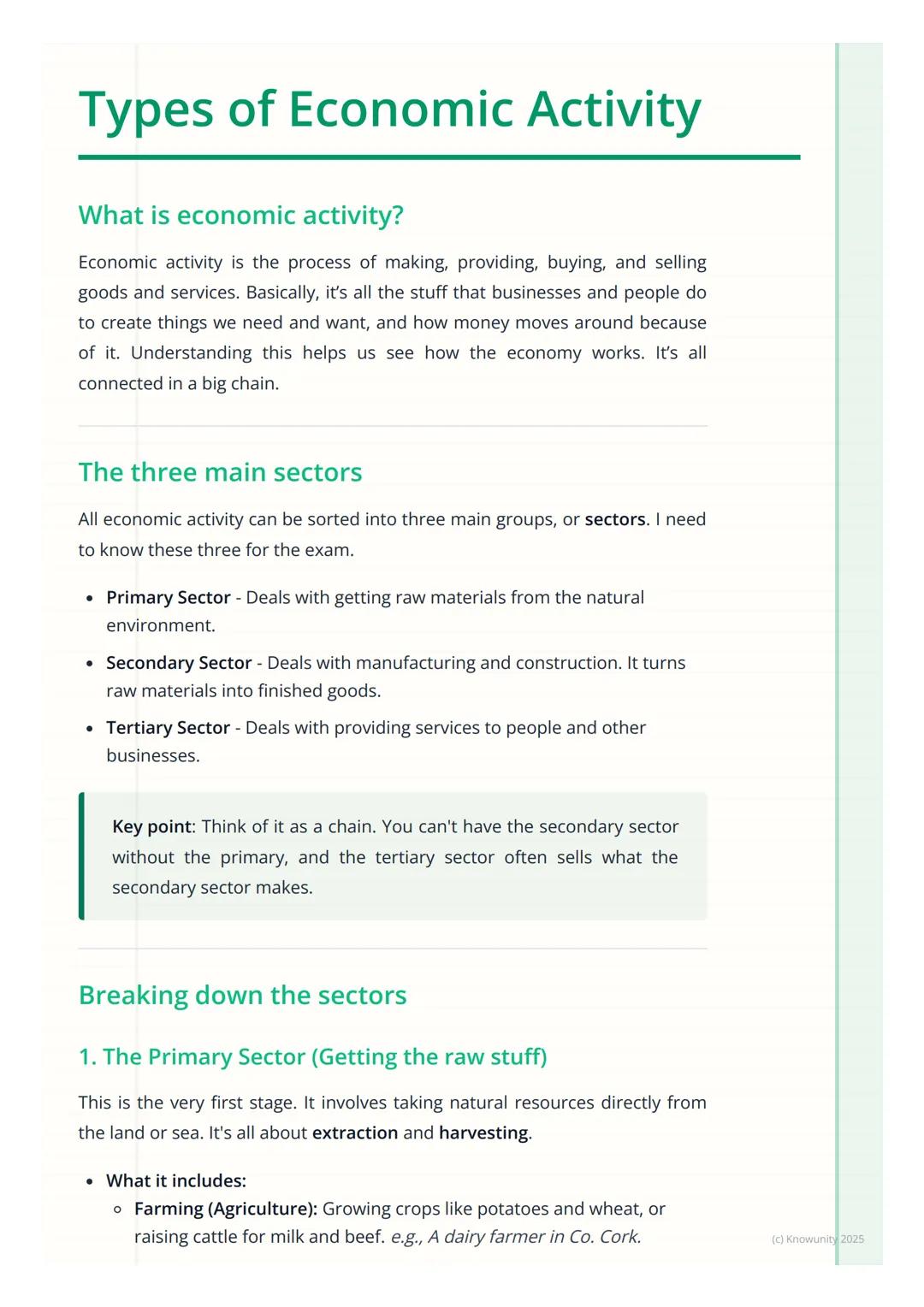
What is Economic Activity?
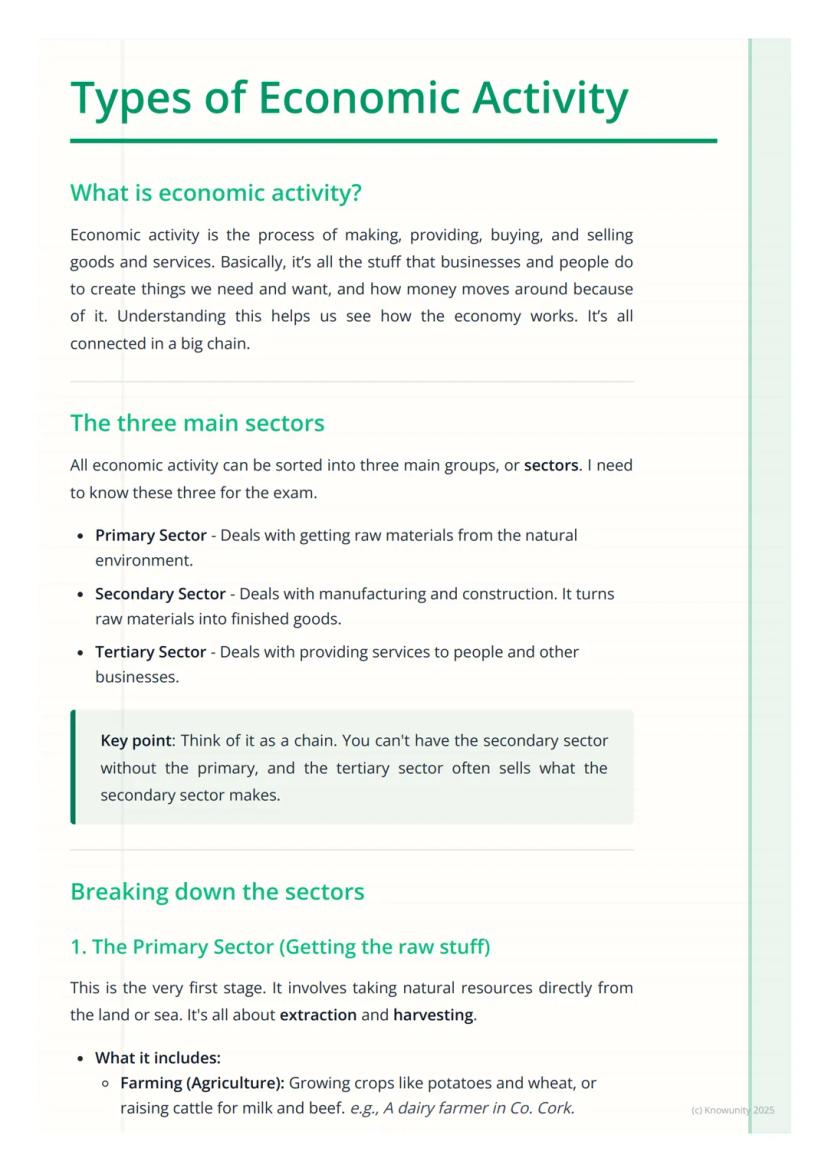
Think of economic activity as everything people and businesses do to create stuff we need and want - from growing food to building houses to running shops. It's basically how money moves around the economy and how we get all the things that make our lives work.
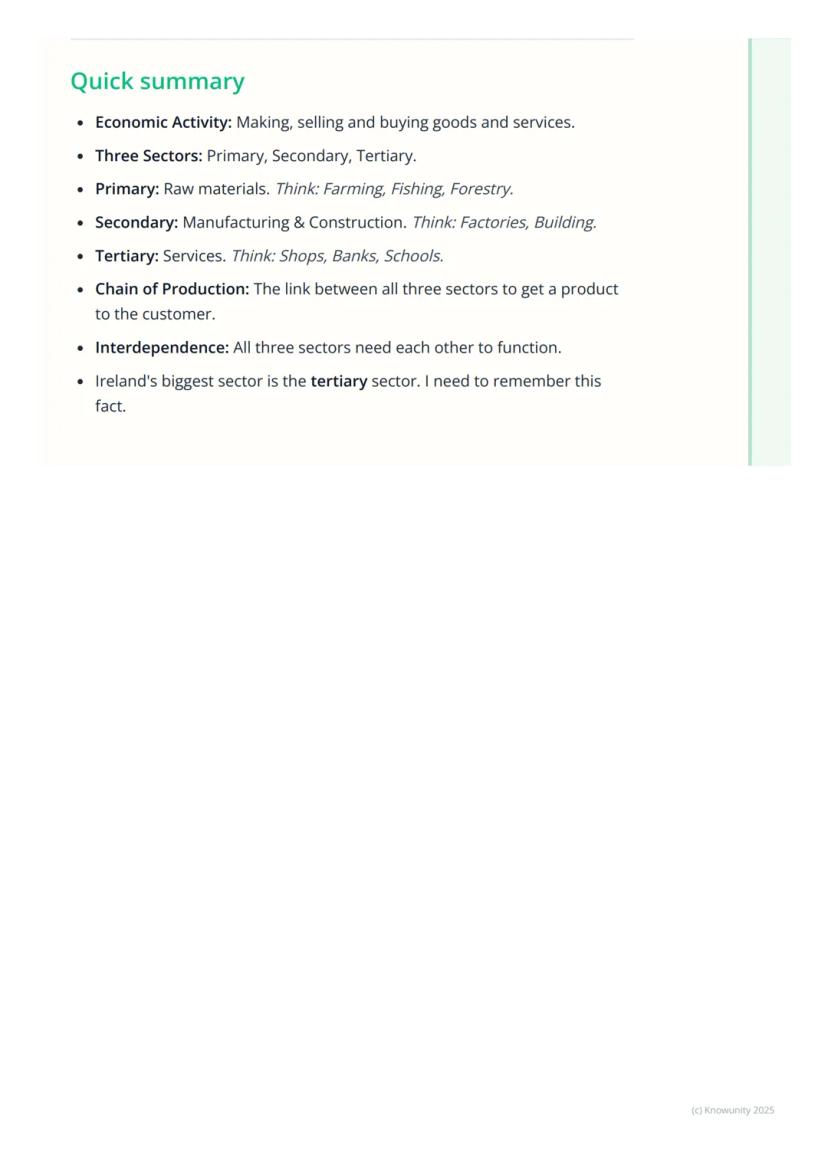
All this activity gets sorted into three main sectors: Primary, Secondary, and Tertiary. Here's the thing - they're all connected like links in a chain. You literally can't have one without the others.
Primary Sector deals with getting raw materials straight from nature. Secondary Sector takes those materials and turns them into finished products. Tertiary Sector provides services to people and businesses.
Key Point: Ireland's economy relies heavily on all three sectors working together - no single sector can survive on its own!
2
of 5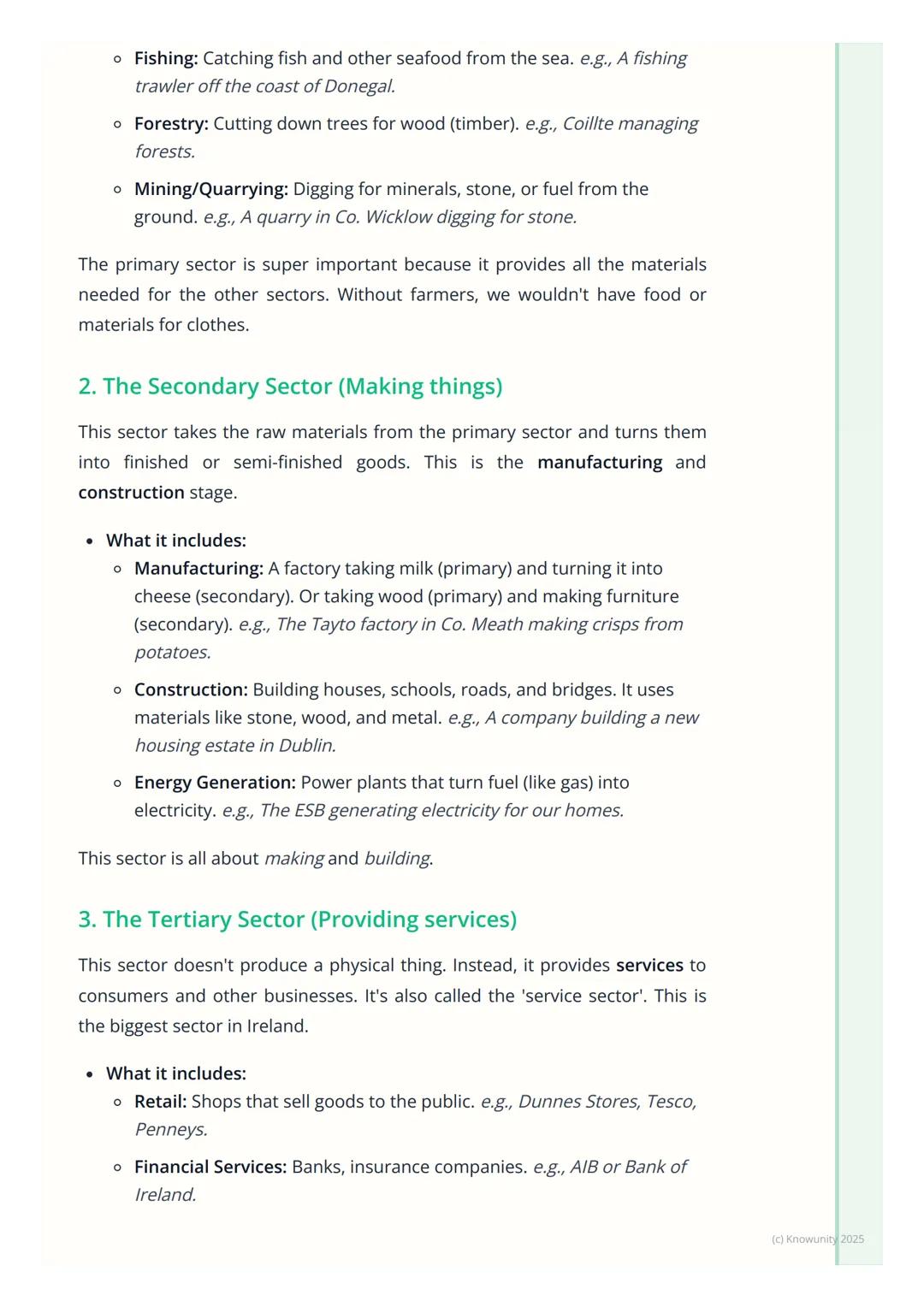
Primary Sector - Getting the Raw Stuff
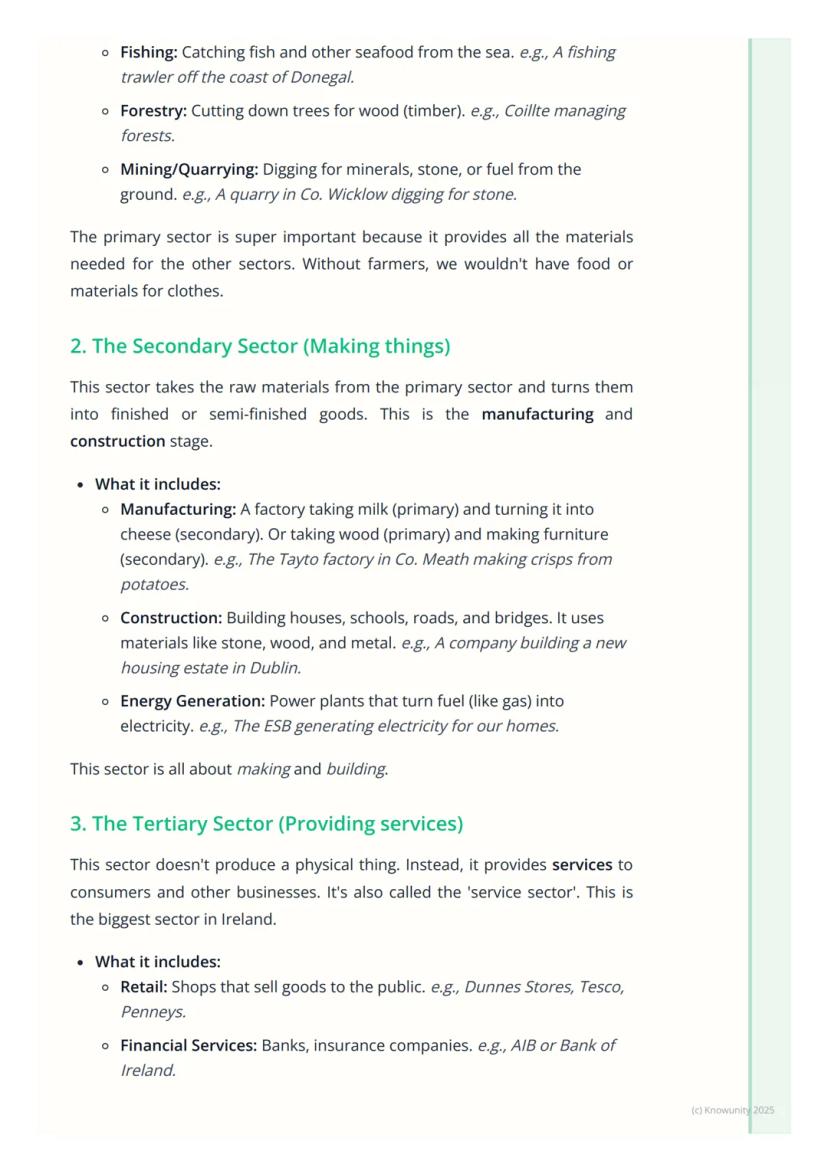
The Primary Sector is where it all begins - extracting natural resources directly from the land or sea. Think farmers, fishers, and anyone who digs stuff up from the ground.
This includes farming (like dairy farmers in Cork growing crops or raising cattle), fishing (trawlers off Donegal's coast), forestry (Coillte managing Ireland's forests), and mining/quarrying (stone quarries in Wicklow).
Without the primary sector, literally nothing else would exist. No food, no materials for clothes, no wood for furniture - you get the idea.
Remember: Primary = getting stuff straight from nature, no processing involved yet!
3
of 5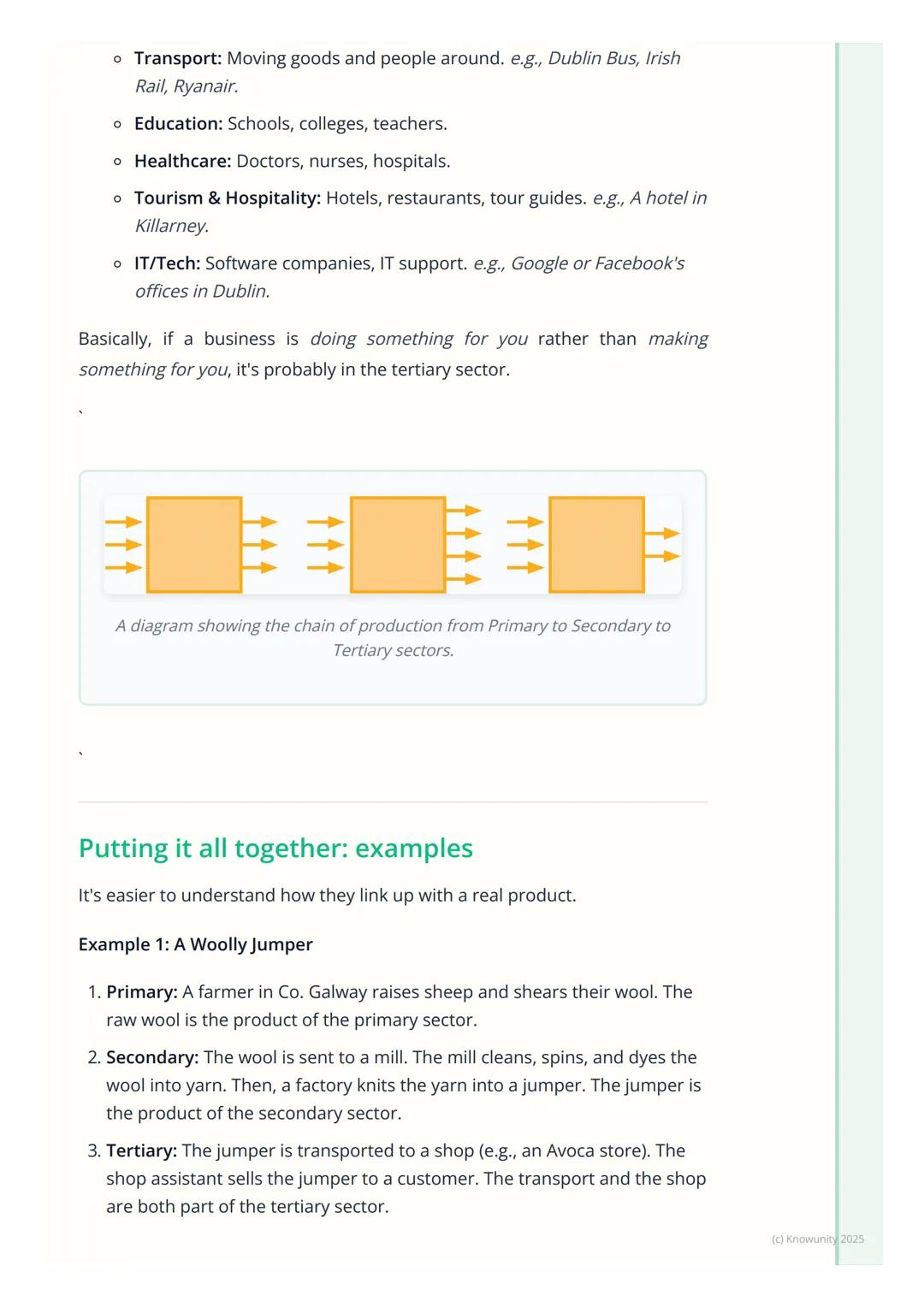
Secondary Sector - Making Things
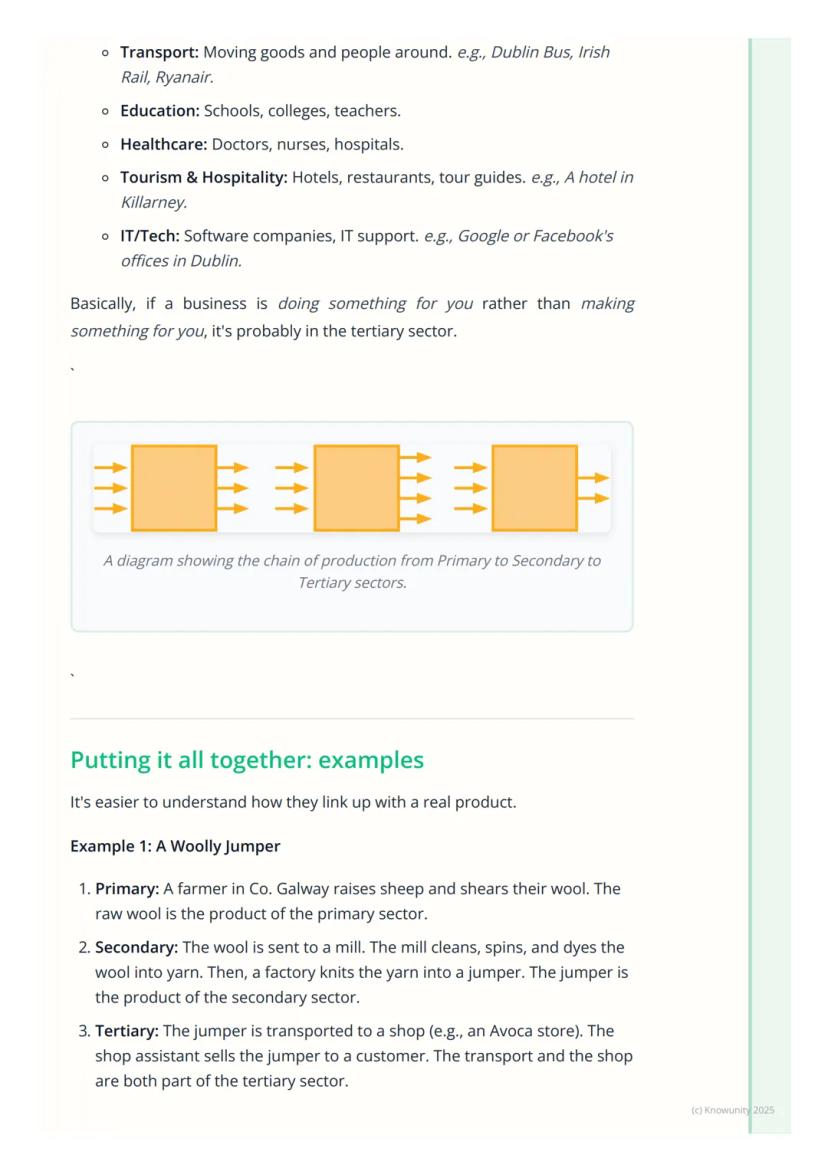
The Secondary Sector takes those raw materials and transforms them into actual products people can use. This is all about manufacturing and construction.
Manufacturing means factories turning milk into cheese, wood into furniture, or potatoes into Tayto crisps in Meath. Construction covers building houses, schools, and roads using materials like stone and timber.
Energy generation also fits here - power plants turning fuel into electricity for your home. Basically, if someone's making or building something physical, it's secondary sector.
Quick Check: Secondary = turning raw materials into finished products that people actually want to buy!
4
of 5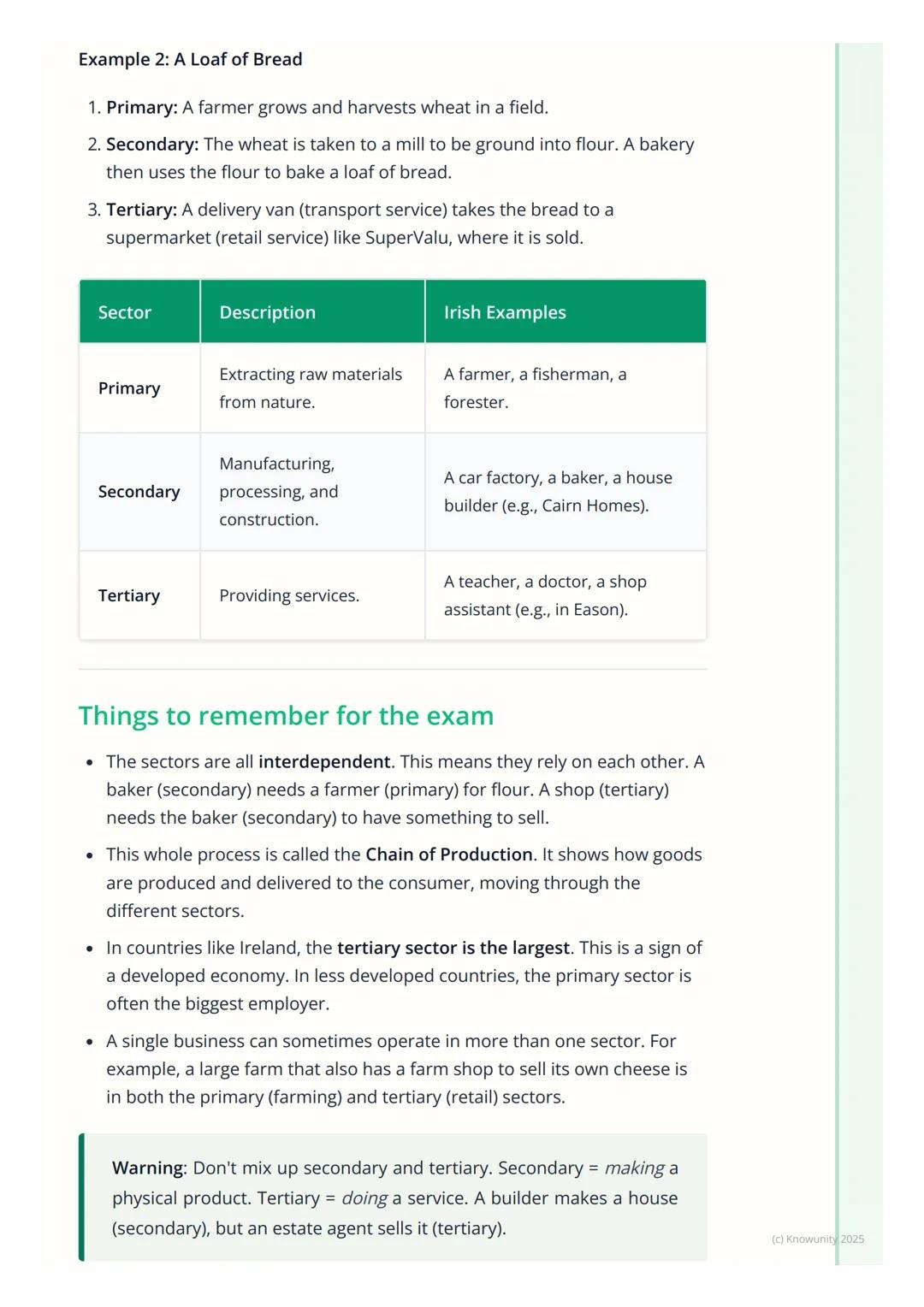
Tertiary Sector - Providing Services
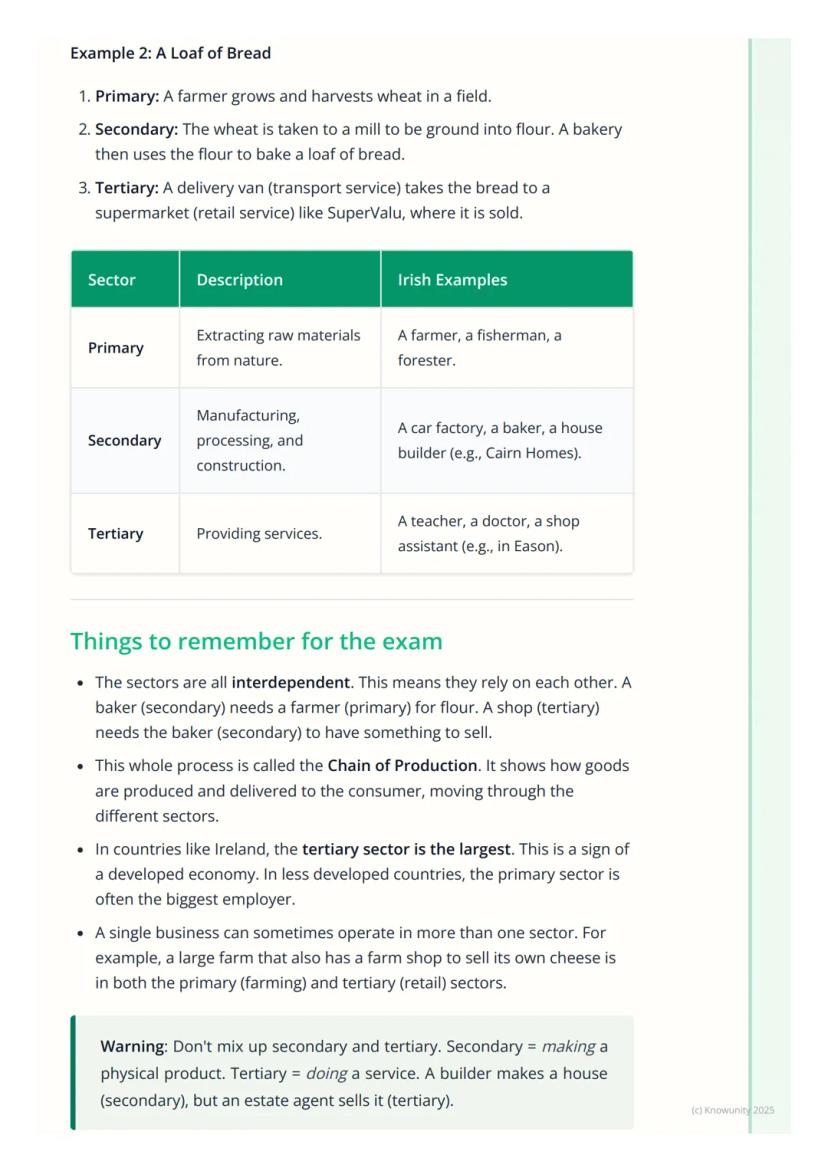
The Tertiary Sector doesn't make physical things - it provides services to people and businesses. This is actually Ireland's biggest sector, which shows we're a developed economy.
This includes retail (Dunnes Stores, Tesco), financial services (AIB, Bank of Ireland), transport (Dublin Bus, Ryanair), education (schools and teachers), healthcare (doctors and hospitals), and tourism (hotels in Killarney).
If a business is doing something for you rather than making something for you, it's probably tertiary sector. Ireland's economy massively depends on this sector.
Pro Tip: If you can't physically hold what the business produces, it's likely a tertiary sector service!
5
of 5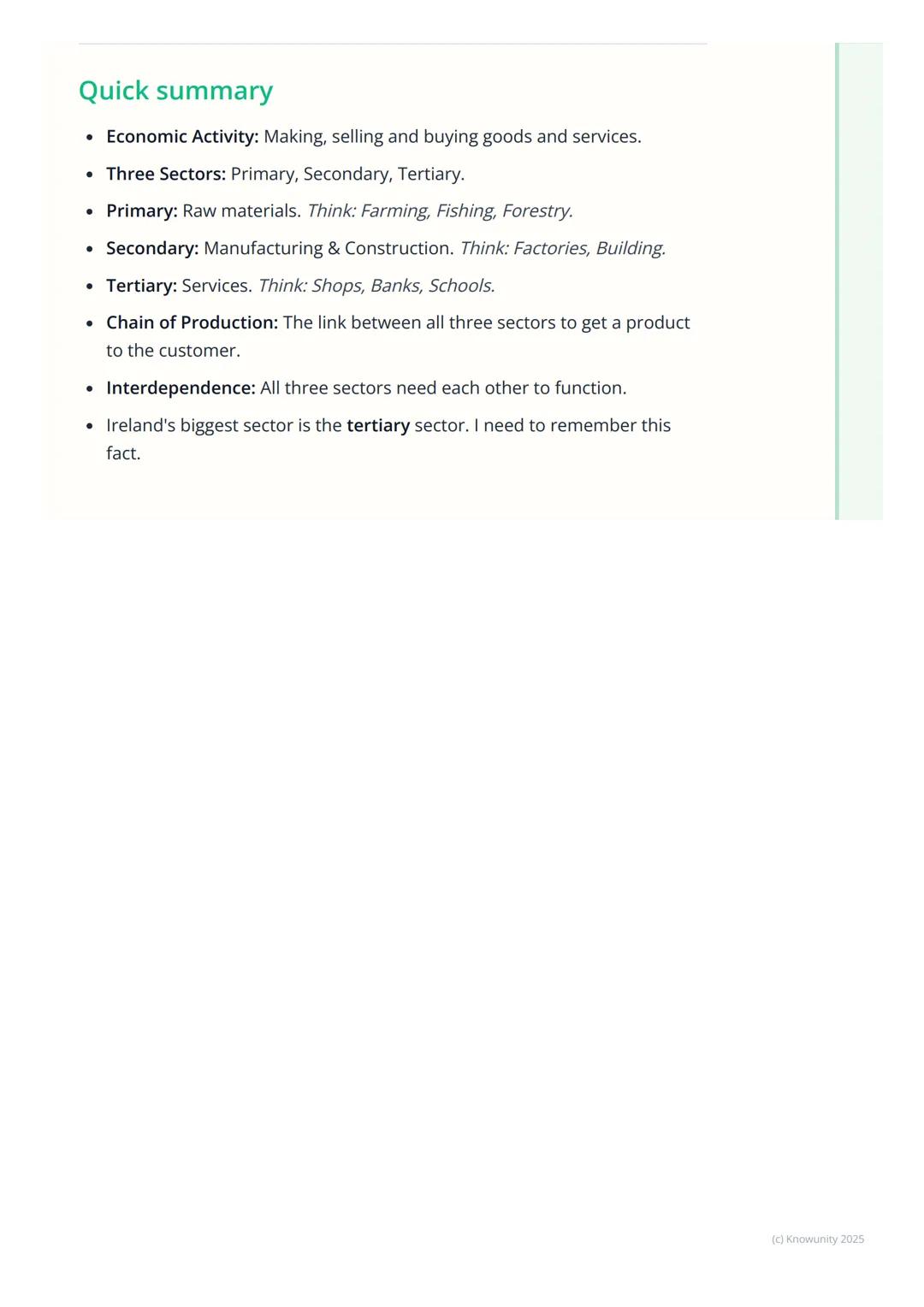
The Chain of Production
Here's how it all connects with real examples. Take a woolly jumper: farmers raise sheep (primary), mills turn wool into yarn and knit jumpers (secondary), then Avoca stores sell them to customers (tertiary).
Or a loaf of bread: farmers grow wheat (primary), mills grind flour and bakeries make bread (secondary), SuperValu sells it (tertiary). Each sector depends on the others - this is called interdependence.
The Chain of Production shows how products move through all three sectors to reach consumers. In Ireland, tertiary is biggest, but we still need primary and secondary to function.
Exam Alert: Remember that all sectors are interdependent - they absolutely cannot work without each other!
Achamos que você nunca perguntaria...
O que é o assistente de IA da Knowunity?
Nosso companheiro de IA foi criado especificamente para atender às necessidades dos estudantes. Com base nos milhões de conteúdos que temos na plataforma, podemos oferecer respostas realmente relevantes e significativas. Mas não se trata apenas de respostas, o companheiro também está aqui para guiar você pelos desafios diários de aprendizado, com planos de estudo personalizados, quizzes ou conteúdos no chat e 100% de personalização com base nas suas habilidades e desenvolvimentos.
Onde posso baixar o app da Knowunity?
Pode descarregar a aplicação na Google Play Store e na Apple App Store.
Como posso receber meu pagamento? Quanto posso ganhar?
Sim, tem acesso gratuito ao conteúdo da aplicação e ao nosso companheiro de IA. Para desbloquear determinadas funcionalidades da aplicação, pode adquirir o Knowunity Pro.
Conteúdos mais populares de Business Studies
1Conteúdos mais populares
9Não encontrou o que procurava? Explore outras matérias.
Avaliações dos nossos usuários. Eles gostaram de tudo — e você também vai gostar.
4.6/5App Store
4.7/5Google Play
O app é muito fácil de usar e bem projetado. Encontrei tudo o que estava procurando até agora e consegui aprender muito com as apresentações! Definitivamente vou usar o app para uma tarefa de classe! E, claro, também ajuda muito como inspiração.
Stefan Susuário de iOS
Este app é realmente ótimo. Tem muitos materiais de estudo e ajuda [...]. Minha matéria problemática é o francês, por exemplo, e o app tem tantas opções de ajuda. Graças a este app, eu melhorei meu francês. Eu recomendaria para qualquer pessoa.
Samantha Klichusuária de Android
Uau, estou realmente impressionado. Eu experimentei o app porque vi muitos anúncios e fiquei absolutamente maravilhado. Este app é A AJUDA que você quer para a escola e, acima de tudo, oferece muitas coisas, como treinos e resumos, que têm sido MUITO úteis para mim pessoalmente.
Annausuária de iOS
Business Studies7 visualizações·Atualizado Jun 3, 2026·5 páginasExploring the Sectors of Economic Activity
Ever wonder how your iPhone gets from raw materials to your pocket, or why some countries focus more on farming whilst others are all about services? Economic activity is basically all the making, buying, and selling that happens around us... Mostrar mais
1
of 5Cadastre-se para ver o conteúdo. É grátis!
- Acesso a todos os documentos
- Melhore suas notas
- Junte-se a milhões de estudantes
What is Economic Activity?
Think of economic activity as everything people and businesses do to create stuff we need and want - from growing food to building houses to running shops. It's basically how money moves around the economy and how we get all the things that make our lives work.
All this activity gets sorted into three main sectors: Primary, Secondary, and Tertiary. Here's the thing - they're all connected like links in a chain. You literally can't have one without the others.
Primary Sector deals with getting raw materials straight from nature. Secondary Sector takes those materials and turns them into finished products. Tertiary Sector provides services to people and businesses.
Key Point: Ireland's economy relies heavily on all three sectors working together - no single sector can survive on its own!
2
of 5Cadastre-se para ver o conteúdo. É grátis!
- Acesso a todos os documentos
- Melhore suas notas
- Junte-se a milhões de estudantes
Primary Sector - Getting the Raw Stuff
The Primary Sector is where it all begins - extracting natural resources directly from the land or sea. Think farmers, fishers, and anyone who digs stuff up from the ground.
This includes farming (like dairy farmers in Cork growing crops or raising cattle), fishing (trawlers off Donegal's coast), forestry (Coillte managing Ireland's forests), and mining/quarrying (stone quarries in Wicklow).
Without the primary sector, literally nothing else would exist. No food, no materials for clothes, no wood for furniture - you get the idea.
Remember: Primary = getting stuff straight from nature, no processing involved yet!
3
of 5Cadastre-se para ver o conteúdo. É grátis!
- Acesso a todos os documentos
- Melhore suas notas
- Junte-se a milhões de estudantes
Secondary Sector - Making Things
The Secondary Sector takes those raw materials and transforms them into actual products people can use. This is all about manufacturing and construction.
Manufacturing means factories turning milk into cheese, wood into furniture, or potatoes into Tayto crisps in Meath. Construction covers building houses, schools, and roads using materials like stone and timber.
Energy generation also fits here - power plants turning fuel into electricity for your home. Basically, if someone's making or building something physical, it's secondary sector.
Quick Check: Secondary = turning raw materials into finished products that people actually want to buy!
4
of 5Cadastre-se para ver o conteúdo. É grátis!
- Acesso a todos os documentos
- Melhore suas notas
- Junte-se a milhões de estudantes
Tertiary Sector - Providing Services
The Tertiary Sector doesn't make physical things - it provides services to people and businesses. This is actually Ireland's biggest sector, which shows we're a developed economy.
This includes retail (Dunnes Stores, Tesco), financial services (AIB, Bank of Ireland), transport (Dublin Bus, Ryanair), education (schools and teachers), healthcare (doctors and hospitals), and tourism (hotels in Killarney).
If a business is doing something for you rather than making something for you, it's probably tertiary sector. Ireland's economy massively depends on this sector.
Pro Tip: If you can't physically hold what the business produces, it's likely a tertiary sector service!
5
of 5Cadastre-se para ver o conteúdo. É grátis!
- Acesso a todos os documentos
- Melhore suas notas
- Junte-se a milhões de estudantes
The Chain of Production
Here's how it all connects with real examples. Take a woolly jumper: farmers raise sheep (primary), mills turn wool into yarn and knit jumpers (secondary), then Avoca stores sell them to customers (tertiary).
Or a loaf of bread: farmers grow wheat (primary), mills grind flour and bakeries make bread (secondary), SuperValu sells it (tertiary). Each sector depends on the others - this is called interdependence.
The Chain of Production shows how products move through all three sectors to reach consumers. In Ireland, tertiary is biggest, but we still need primary and secondary to function.
Exam Alert: Remember that all sectors are interdependent - they absolutely cannot work without each other!
Achamos que você nunca perguntaria...
O que é o assistente de IA da Knowunity?
Nosso companheiro de IA foi criado especificamente para atender às necessidades dos estudantes. Com base nos milhões de conteúdos que temos na plataforma, podemos oferecer respostas realmente relevantes e significativas. Mas não se trata apenas de respostas, o companheiro também está aqui para guiar você pelos desafios diários de aprendizado, com planos de estudo personalizados, quizzes ou conteúdos no chat e 100% de personalização com base nas suas habilidades e desenvolvimentos.
Onde posso baixar o app da Knowunity?
Pode descarregar a aplicação na Google Play Store e na Apple App Store.
Como posso receber meu pagamento? Quanto posso ganhar?
Sim, tem acesso gratuito ao conteúdo da aplicação e ao nosso companheiro de IA. Para desbloquear determinadas funcionalidades da aplicação, pode adquirir o Knowunity Pro.
Conteúdos mais populares de Business Studies
1Conteúdos mais populares
9Não encontrou o que procurava? Explore outras matérias.
Avaliações dos nossos usuários. Eles gostaram de tudo — e você também vai gostar.
4.6/5App Store
4.7/5Google Play
O app é muito fácil de usar e bem projetado. Encontrei tudo o que estava procurando até agora e consegui aprender muito com as apresentações! Definitivamente vou usar o app para uma tarefa de classe! E, claro, também ajuda muito como inspiração.
Stefan Susuário de iOS
Este app é realmente ótimo. Tem muitos materiais de estudo e ajuda [...]. Minha matéria problemática é o francês, por exemplo, e o app tem tantas opções de ajuda. Graças a este app, eu melhorei meu francês. Eu recomendaria para qualquer pessoa.
Samantha Klichusuária de Android
Uau, estou realmente impressionado. Eu experimentei o app porque vi muitos anúncios e fiquei absolutamente maravilhado. Este app é A AJUDA que você quer para a escola e, acima de tudo, oferece muitas coisas, como treinos e resumos, que têm sido MUITO úteis para mim pessoalmente.
Annausuária de iOS