
Ever wondered what makes plants so different from animals? It...
 Biology8 visualizações·Atualizado Jun 3, 2026·6 páginas
Understanding Plant Cells: Key Structures and Differences
1 / 6
1
of 6
Introduction to Plant Cells
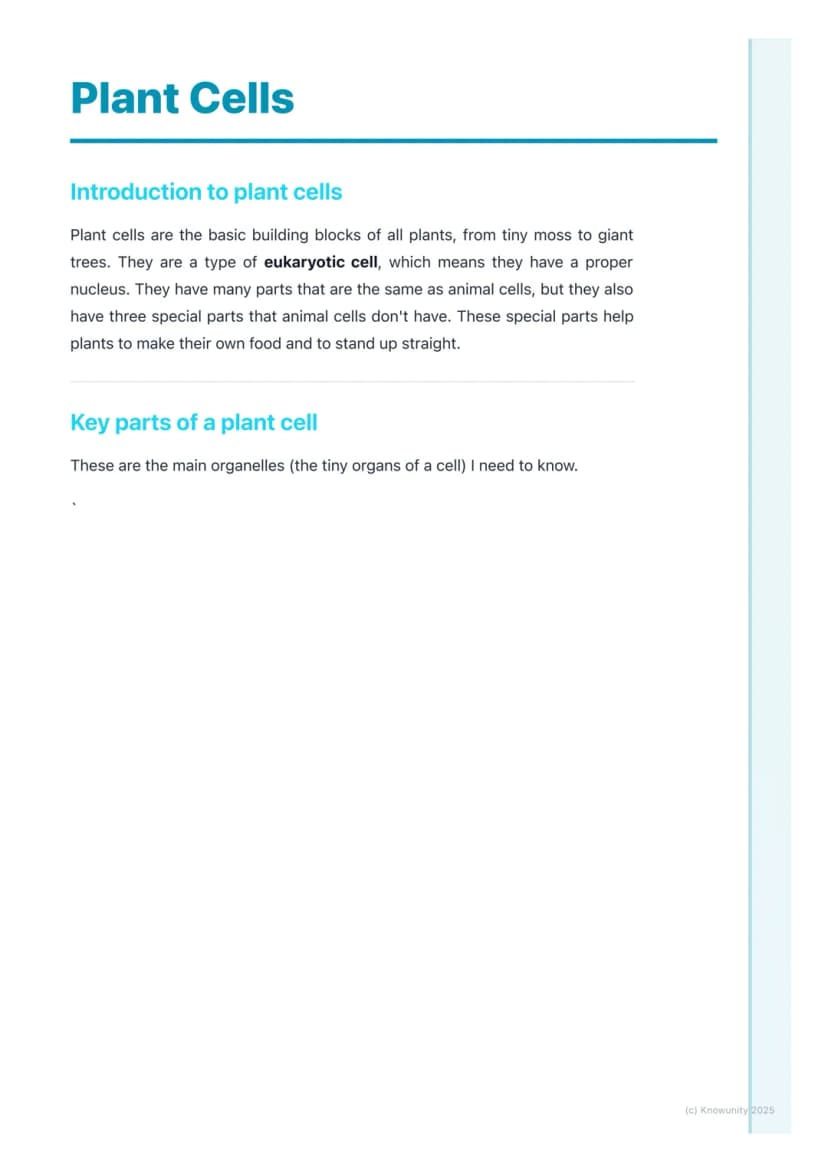
Plant cells are eukaryotic cells, which simply means they have a proper control centre called a nucleus. What makes them special is that they've got three unique parts that animal cells don't have.
These three special features are what allow plants to create their own food and stay upright without needing a skeleton. Think of them as the plant's superpowers!
Quick Tip: Remember the 3 C's for plant cells - Cell wall, Chloroplasts, and Central vacuole (the large one)!
2
of 6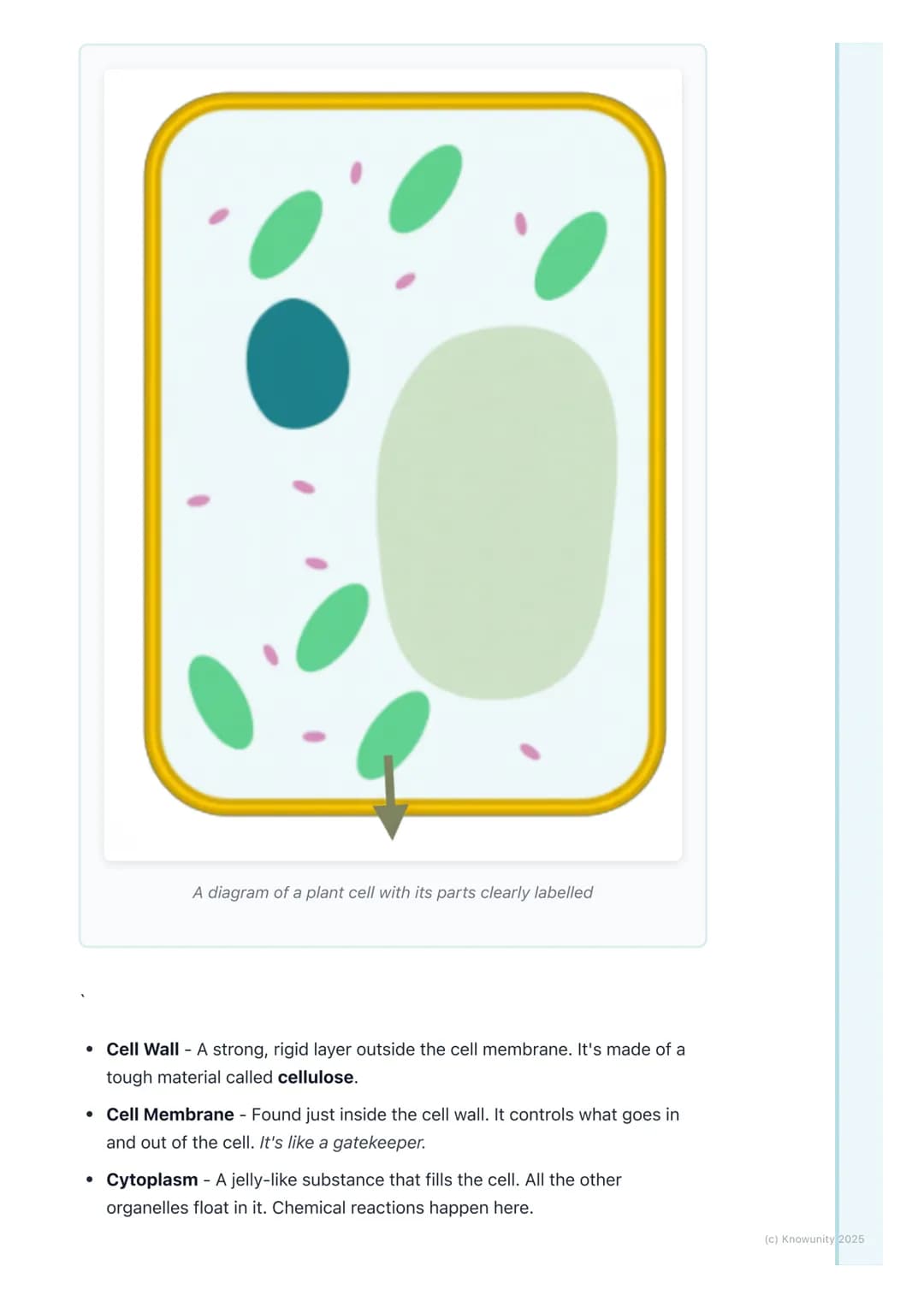
Key Parts of a Plant Cell
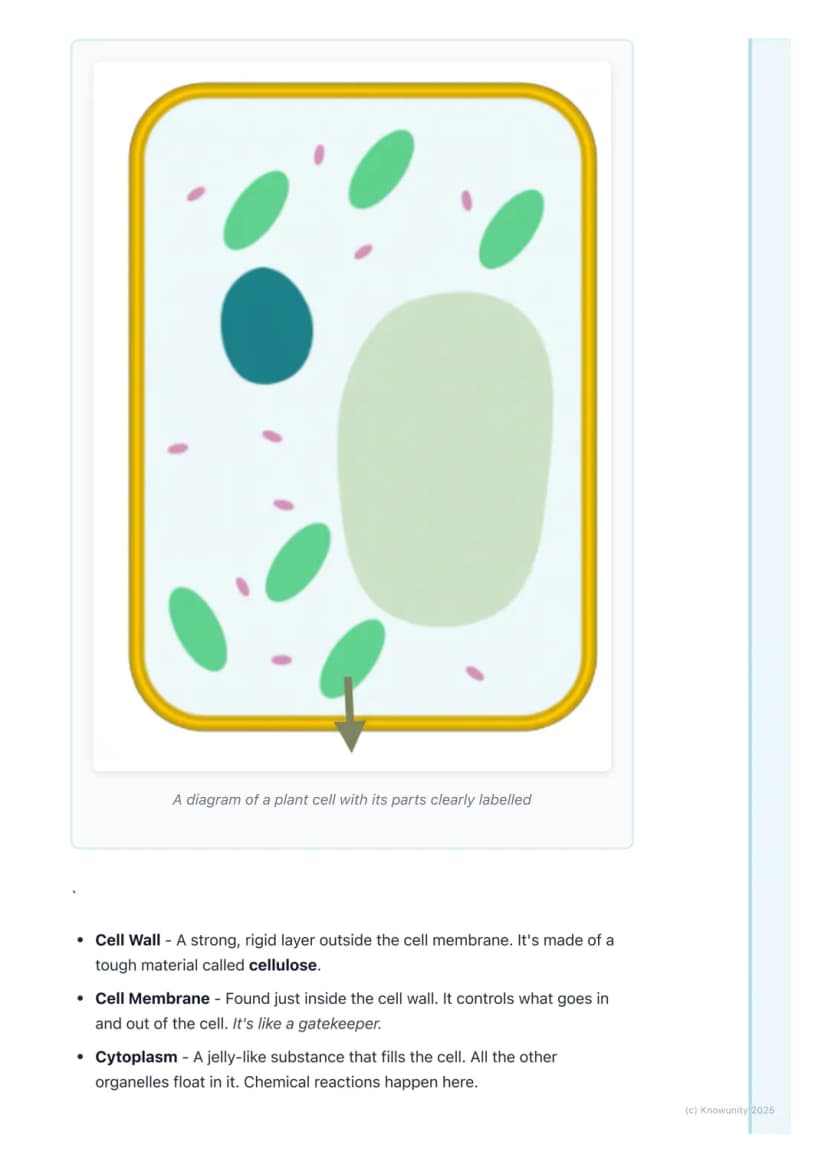
The cell wall is like a tough outer shell made of cellulose that sits outside the cell membrane. It's the plant's armour, providing structure and protection.
Inside, you'll find the cell membrane acting like a bouncer at a club - it decides what gets in and out of the cell. The cytoplasm is the jelly-like substance where all the cell's chemical reactions happen.
The nucleus is the boss of the cell, containing DNA with all the instructions. This is exactly the same job it does in your own cells!
Remember: Don't mix up the cell wall and cell membrane - the wall is on the very outside for structure, the membrane is inside for control!
3
of 6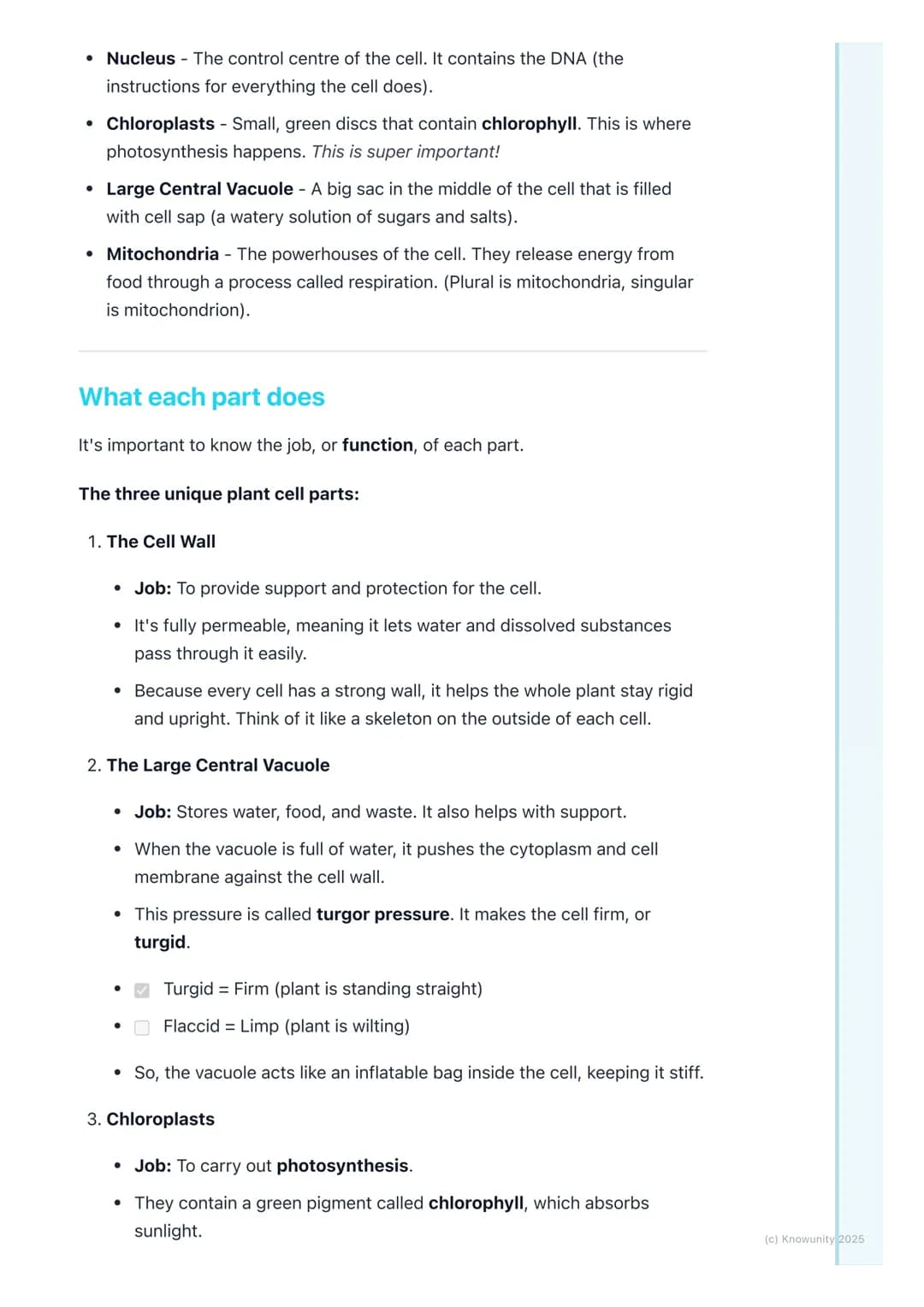
The Three Special Plant Parts
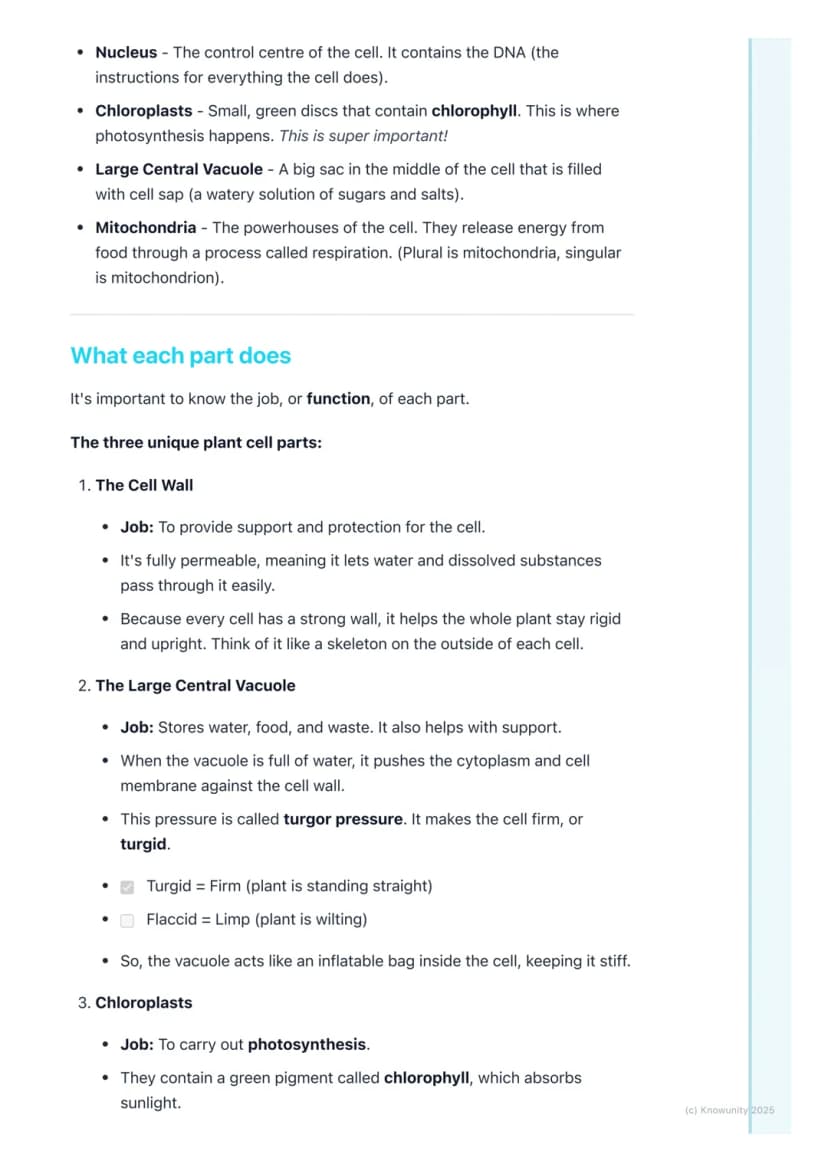
Chloroplasts are tiny green discs packed with chlorophyll that capture sunlight for photosynthesis. This is why plants are green and why they're called 'producers' in food chains.
The large central vacuole is like a water balloon inside the cell. When it's full, it creates turgor pressure that pushes against the cell wall, keeping the plant firm and upright.
Mitochondria are the powerhouses that release energy from food through respiration - just like in animal cells. Plants need energy too, even though they make their own food!
Key Concept: When plants wilt, it's because their vacuoles lose water and can't maintain turgor pressure anymore!
4
of 6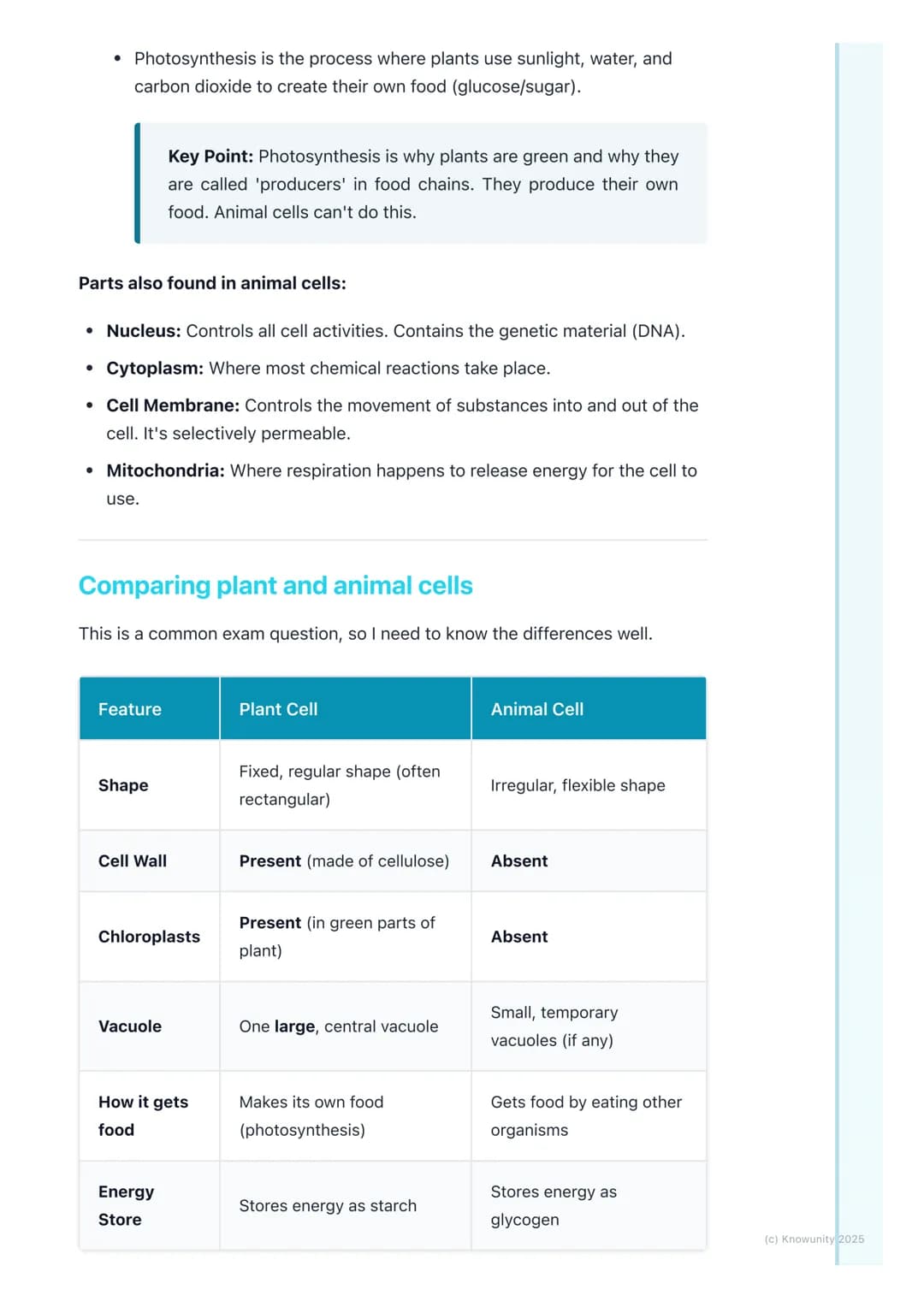
Comparing Plant and Animal Cells
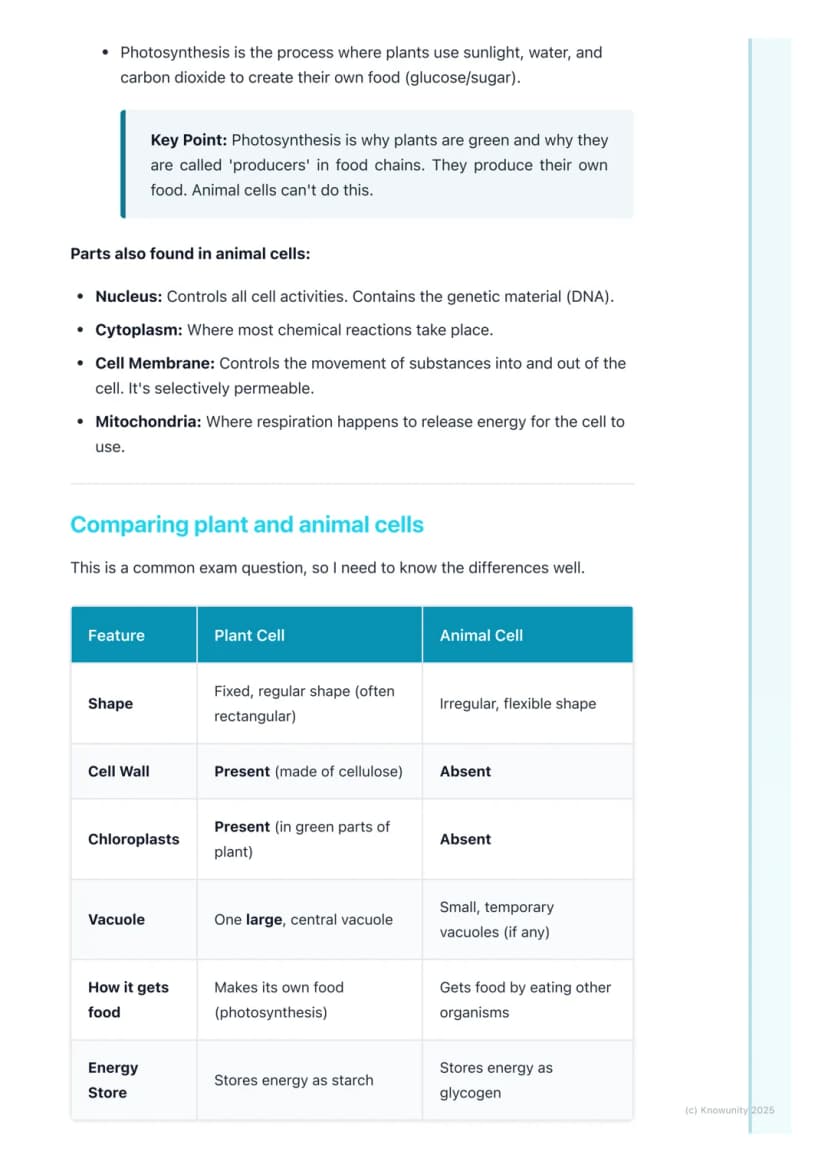
Plant cells have a fixed, rectangular shape thanks to their rigid cell wall, while animal cells are blobby and flexible. This structural difference is huge!
The biggest difference is how they get food. Plants perform photosynthesis in their chloroplasts to make glucose, whilst animals (like us) have to eat other organisms for energy.
Plants store energy as starch, but animals store it as glycogen. Plant cells also have one massive vacuole, whilst animal cells might have tiny temporary ones or none at all.
Exam Tip: A leaf cell will be packed with chloroplasts for maximum sunlight capture, but root cells won't have any since they're underground!
5
of 6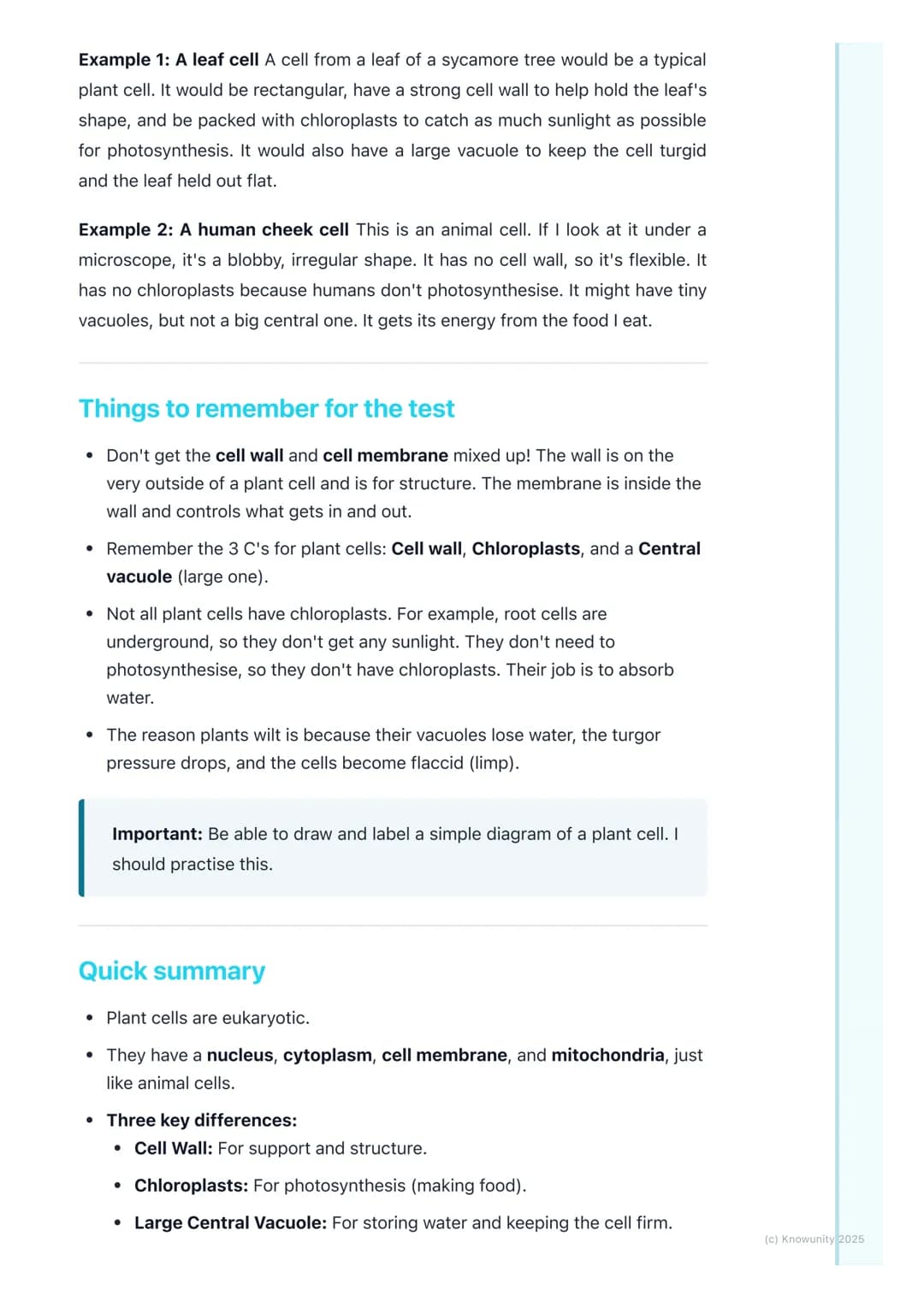
Functions and Examples
A leaf cell from a tree is the perfect example - rectangular, strong cell wall, loads of chloroplasts, and a big vacuole to keep the leaf flat and rigid for catching sunlight.
Compare this to a human cheek cell - irregular shape, no cell wall (so it's flexible), no chloroplasts (we can't photosynthesise!), and it gets energy from the food we eat.
The three unique plant features work together brilliantly: the cell wall provides structure, chloroplasts make food from sunlight, and the central vacuole maintains turgor pressure to prevent wilting.
Practice Point: Make sure you can draw and label a simple plant cell diagram - this often comes up in tests!
6
of 6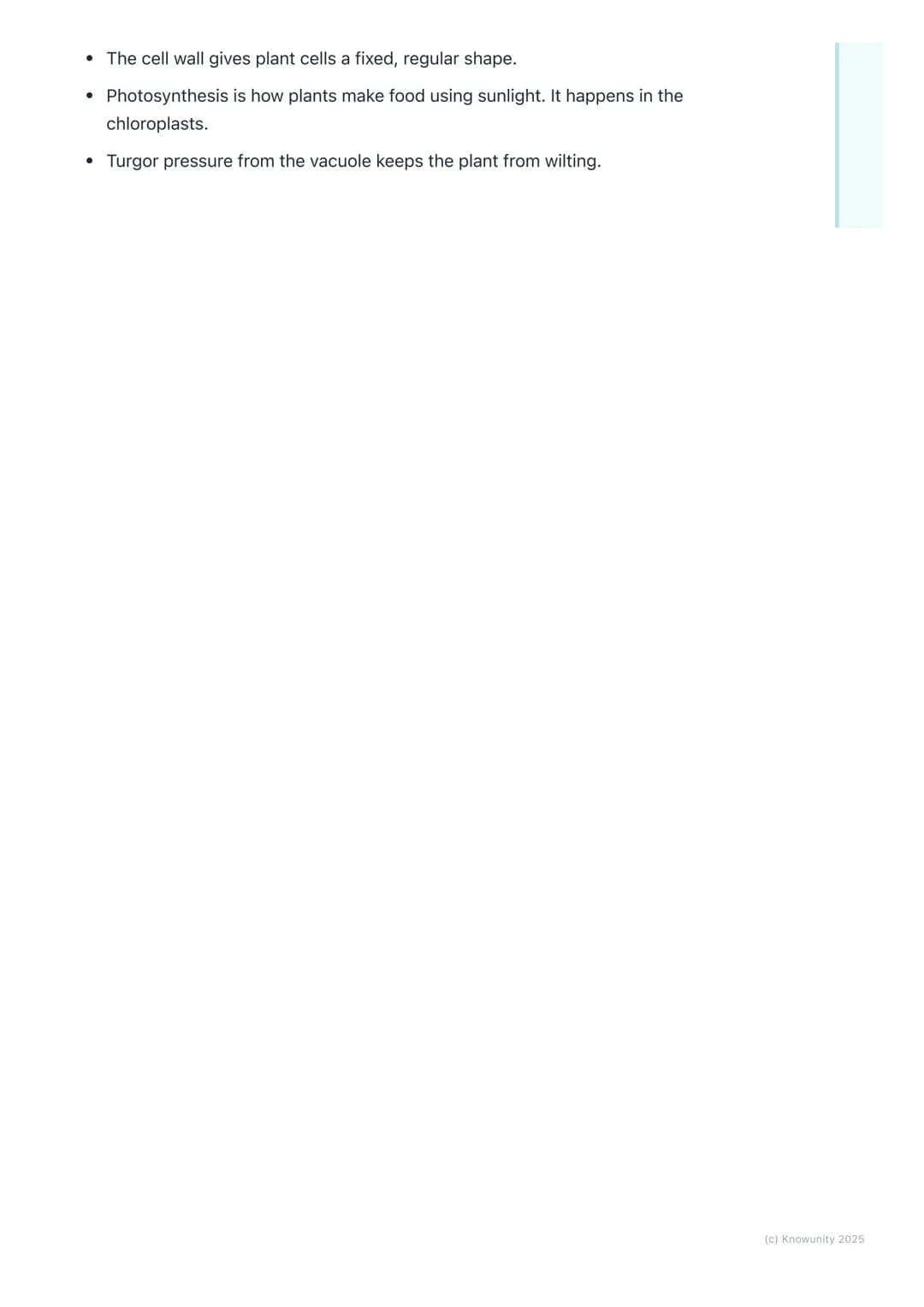
Quick Summary
Plant cells are eukaryotic with the same basic parts as animal cells - nucleus, cytoplasm, cell membrane, and mitochondria. The three key differences make all the difference though!
Cell walls give plants their fixed shape and structural support. Chloroplasts allow photosynthesis to happen, making plants the producers of ecosystems. The large central vacuole stores water and maintains turgor pressure.
When you see a plant standing tall and green, you're seeing these cellular superpowers in action. No wonder plants have been so successful on Earth!
Final Reminder: Not all plant cells have chloroplasts - root cells don't need them since they're underground and can't photosynthesise!
Achamos que você nunca perguntaria...
O que é o assistente de IA da Knowunity?
Nosso companheiro de IA foi criado especificamente para atender às necessidades dos estudantes. Com base nos milhões de conteúdos que temos na plataforma, podemos oferecer respostas realmente relevantes e significativas. Mas não se trata apenas de respostas, o companheiro também está aqui para guiar você pelos desafios diários de aprendizado, com planos de estudo personalizados, quizzes ou conteúdos no chat e 100% de personalização com base nas suas habilidades e desenvolvimentos.
Onde posso baixar o app da Knowunity?
Pode descarregar a aplicação na Google Play Store e na Apple App Store.
Como posso receber meu pagamento? Quanto posso ganhar?
Sim, tem acesso gratuito ao conteúdo da aplicação e ao nosso companheiro de IA. Para desbloquear determinadas funcionalidades da aplicação, pode adquirir o Knowunity Pro.
Conteúdos mais populares de Biology
7Conteúdos mais populares
9Não encontrou o que procurava? Explore outras matérias.
Avaliações dos nossos usuários. Eles gostaram de tudo — e você também vai gostar.
4.6/5App Store
4.7/5Google Play
O app é muito fácil de usar e bem projetado. Encontrei tudo o que estava procurando até agora e consegui aprender muito com as apresentações! Definitivamente vou usar o app para uma tarefa de classe! E, claro, também ajuda muito como inspiração.
Stefan Susuário de iOS
Este app é realmente ótimo. Tem muitos materiais de estudo e ajuda [...]. Minha matéria problemática é o francês, por exemplo, e o app tem tantas opções de ajuda. Graças a este app, eu melhorei meu francês. Eu recomendaria para qualquer pessoa.
Samantha Klichusuária de Android
Uau, estou realmente impressionado. Eu experimentei o app porque vi muitos anúncios e fiquei absolutamente maravilhado. Este app é A AJUDA que você quer para a escola e, acima de tudo, oferece muitas coisas, como treinos e resumos, que têm sido MUITO úteis para mim pessoalmente.
Annausuária de iOS
Biology8 visualizações·Atualizado Jun 3, 2026·6 páginasUnderstanding Plant Cells: Key Structures and Differences
Ever wondered what makes plants so different from animals? It all comes down to their cells! Plant cells are the tiny building blocks that help plants make their own food and stand tall without bones.
1
of 6
Cadastre-se para ver o conteúdo. É grátis!
- Acesso a todos os documentos
- Melhore suas notas
- Junte-se a milhões de estudantes
Introduction to Plant Cells
Plant cells are eukaryotic cells, which simply means they have a proper control centre called a nucleus. What makes them special is that they've got three unique parts that animal cells don't have.
These three special features are what allow plants to create their own food and stay upright without needing a skeleton. Think of them as the plant's superpowers!
Quick Tip: Remember the 3 C's for plant cells - Cell wall, Chloroplasts, and Central vacuole (the large one)!
2
of 6Cadastre-se para ver o conteúdo. É grátis!
- Acesso a todos os documentos
- Melhore suas notas
- Junte-se a milhões de estudantes
Key Parts of a Plant Cell
The cell wall is like a tough outer shell made of cellulose that sits outside the cell membrane. It's the plant's armour, providing structure and protection.
Inside, you'll find the cell membrane acting like a bouncer at a club - it decides what gets in and out of the cell. The cytoplasm is the jelly-like substance where all the cell's chemical reactions happen.
The nucleus is the boss of the cell, containing DNA with all the instructions. This is exactly the same job it does in your own cells!
Remember: Don't mix up the cell wall and cell membrane - the wall is on the very outside for structure, the membrane is inside for control!
3
of 6Cadastre-se para ver o conteúdo. É grátis!
- Acesso a todos os documentos
- Melhore suas notas
- Junte-se a milhões de estudantes
The Three Special Plant Parts
Chloroplasts are tiny green discs packed with chlorophyll that capture sunlight for photosynthesis. This is why plants are green and why they're called 'producers' in food chains.
The large central vacuole is like a water balloon inside the cell. When it's full, it creates turgor pressure that pushes against the cell wall, keeping the plant firm and upright.
Mitochondria are the powerhouses that release energy from food through respiration - just like in animal cells. Plants need energy too, even though they make their own food!
Key Concept: When plants wilt, it's because their vacuoles lose water and can't maintain turgor pressure anymore!
4
of 6Cadastre-se para ver o conteúdo. É grátis!
- Acesso a todos os documentos
- Melhore suas notas
- Junte-se a milhões de estudantes
Comparing Plant and Animal Cells
Plant cells have a fixed, rectangular shape thanks to their rigid cell wall, while animal cells are blobby and flexible. This structural difference is huge!
The biggest difference is how they get food. Plants perform photosynthesis in their chloroplasts to make glucose, whilst animals (like us) have to eat other organisms for energy.
Plants store energy as starch, but animals store it as glycogen. Plant cells also have one massive vacuole, whilst animal cells might have tiny temporary ones or none at all.
Exam Tip: A leaf cell will be packed with chloroplasts for maximum sunlight capture, but root cells won't have any since they're underground!
5
of 6Cadastre-se para ver o conteúdo. É grátis!
- Acesso a todos os documentos
- Melhore suas notas
- Junte-se a milhões de estudantes
Functions and Examples
A leaf cell from a tree is the perfect example - rectangular, strong cell wall, loads of chloroplasts, and a big vacuole to keep the leaf flat and rigid for catching sunlight.
Compare this to a human cheek cell - irregular shape, no cell wall (so it's flexible), no chloroplasts (we can't photosynthesise!), and it gets energy from the food we eat.
The three unique plant features work together brilliantly: the cell wall provides structure, chloroplasts make food from sunlight, and the central vacuole maintains turgor pressure to prevent wilting.
Practice Point: Make sure you can draw and label a simple plant cell diagram - this often comes up in tests!
6
of 6Cadastre-se para ver o conteúdo. É grátis!
- Acesso a todos os documentos
- Melhore suas notas
- Junte-se a milhões de estudantes
Quick Summary
Plant cells are eukaryotic with the same basic parts as animal cells - nucleus, cytoplasm, cell membrane, and mitochondria. The three key differences make all the difference though!
Cell walls give plants their fixed shape and structural support. Chloroplasts allow photosynthesis to happen, making plants the producers of ecosystems. The large central vacuole stores water and maintains turgor pressure.
When you see a plant standing tall and green, you're seeing these cellular superpowers in action. No wonder plants have been so successful on Earth!
Final Reminder: Not all plant cells have chloroplasts - root cells don't need them since they're underground and can't photosynthesise!
Achamos que você nunca perguntaria...
O que é o assistente de IA da Knowunity?
Nosso companheiro de IA foi criado especificamente para atender às necessidades dos estudantes. Com base nos milhões de conteúdos que temos na plataforma, podemos oferecer respostas realmente relevantes e significativas. Mas não se trata apenas de respostas, o companheiro também está aqui para guiar você pelos desafios diários de aprendizado, com planos de estudo personalizados, quizzes ou conteúdos no chat e 100% de personalização com base nas suas habilidades e desenvolvimentos.
Onde posso baixar o app da Knowunity?
Pode descarregar a aplicação na Google Play Store e na Apple App Store.
Como posso receber meu pagamento? Quanto posso ganhar?
Sim, tem acesso gratuito ao conteúdo da aplicação e ao nosso companheiro de IA. Para desbloquear determinadas funcionalidades da aplicação, pode adquirir o Knowunity Pro.
Conteúdos mais populares de Biology
7Conteúdos mais populares
9Não encontrou o que procurava? Explore outras matérias.
Avaliações dos nossos usuários. Eles gostaram de tudo — e você também vai gostar.
4.6/5App Store
4.7/5Google Play
O app é muito fácil de usar e bem projetado. Encontrei tudo o que estava procurando até agora e consegui aprender muito com as apresentações! Definitivamente vou usar o app para uma tarefa de classe! E, claro, também ajuda muito como inspiração.
Stefan Susuário de iOS
Este app é realmente ótimo. Tem muitos materiais de estudo e ajuda [...]. Minha matéria problemática é o francês, por exemplo, e o app tem tantas opções de ajuda. Graças a este app, eu melhorei meu francês. Eu recomendaria para qualquer pessoa.
Samantha Klichusuária de Android
Uau, estou realmente impressionado. Eu experimentei o app porque vi muitos anúncios e fiquei absolutamente maravilhado. Este app é A AJUDA que você quer para a escola e, acima de tudo, oferece muitas coisas, como treinos e resumos, que têm sido MUITO úteis para mim pessoalmente.
Annausuária de iOS