
Grass is literally Ireland's green gold - our mild, wet...
 Agricultural Science5 visualizações·Atualizado Jun 12, 2026·6 páginas
Effective Grassland Management Techniques
1 / 6
1
of 6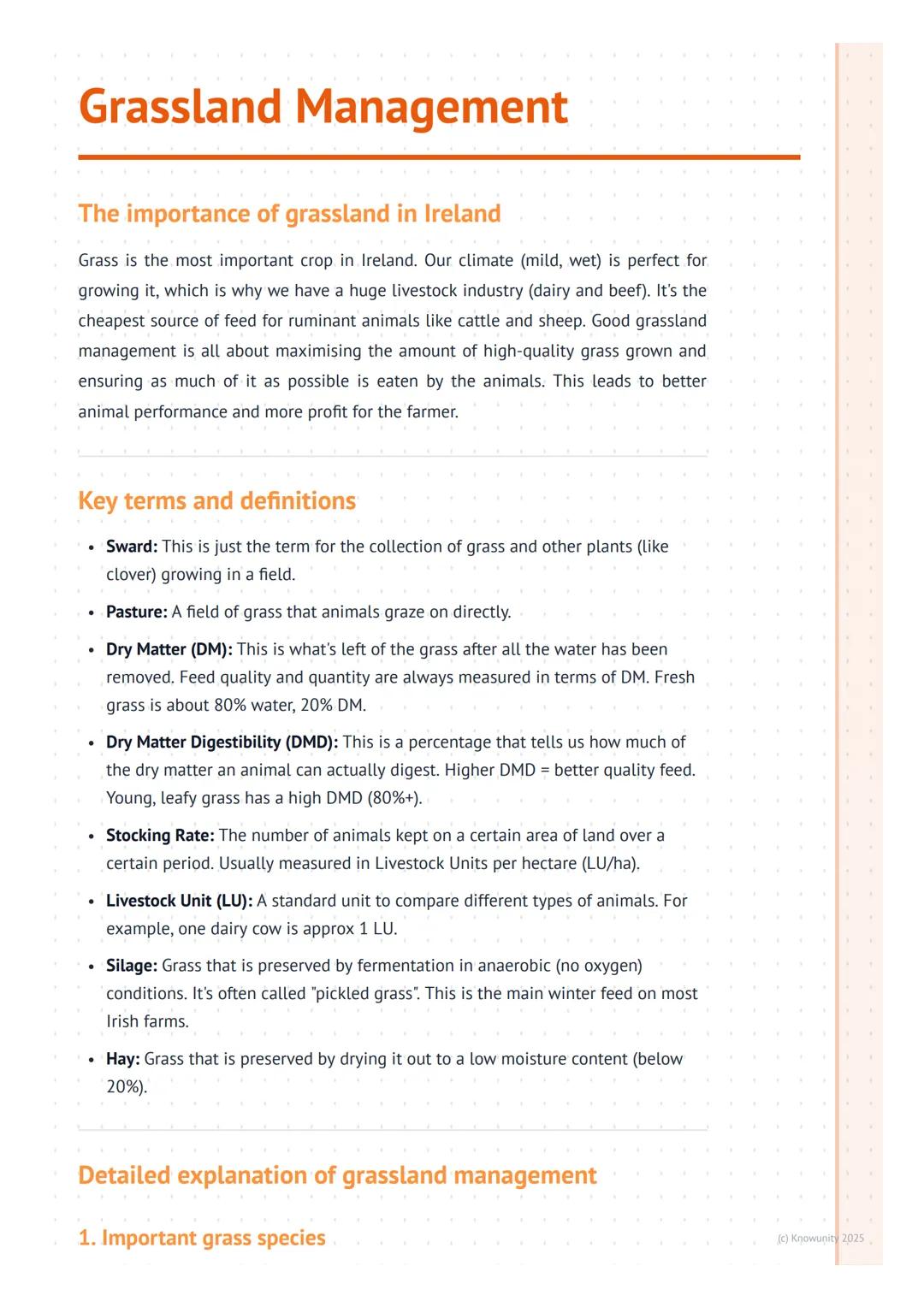
The Importance of Grassland in Ireland
Think about it - nearly every field you see driving through the countryside is growing grass, and there's a very good reason for that. Our weather might be rubbish for holidays, but it's absolutely perfect for grass production.
Grass is the cheapest feed you can give to cattle and sheep, which makes it the foundation of Irish agriculture. The whole game is about maximising both the quantity and quality of grass your land produces, then ensuring your animals actually eat as much of it as possible rather than trampling it into mud.
When farmers nail their grassland management, their animals perform better (more milk, better weight gain) and their profits shoot up. It's that simple - better grass equals better business.
Key Insight: Good grassland management isn't just about growing grass - it's about growing the right grass at the right time and making sure none of it goes to waste.
2
of 6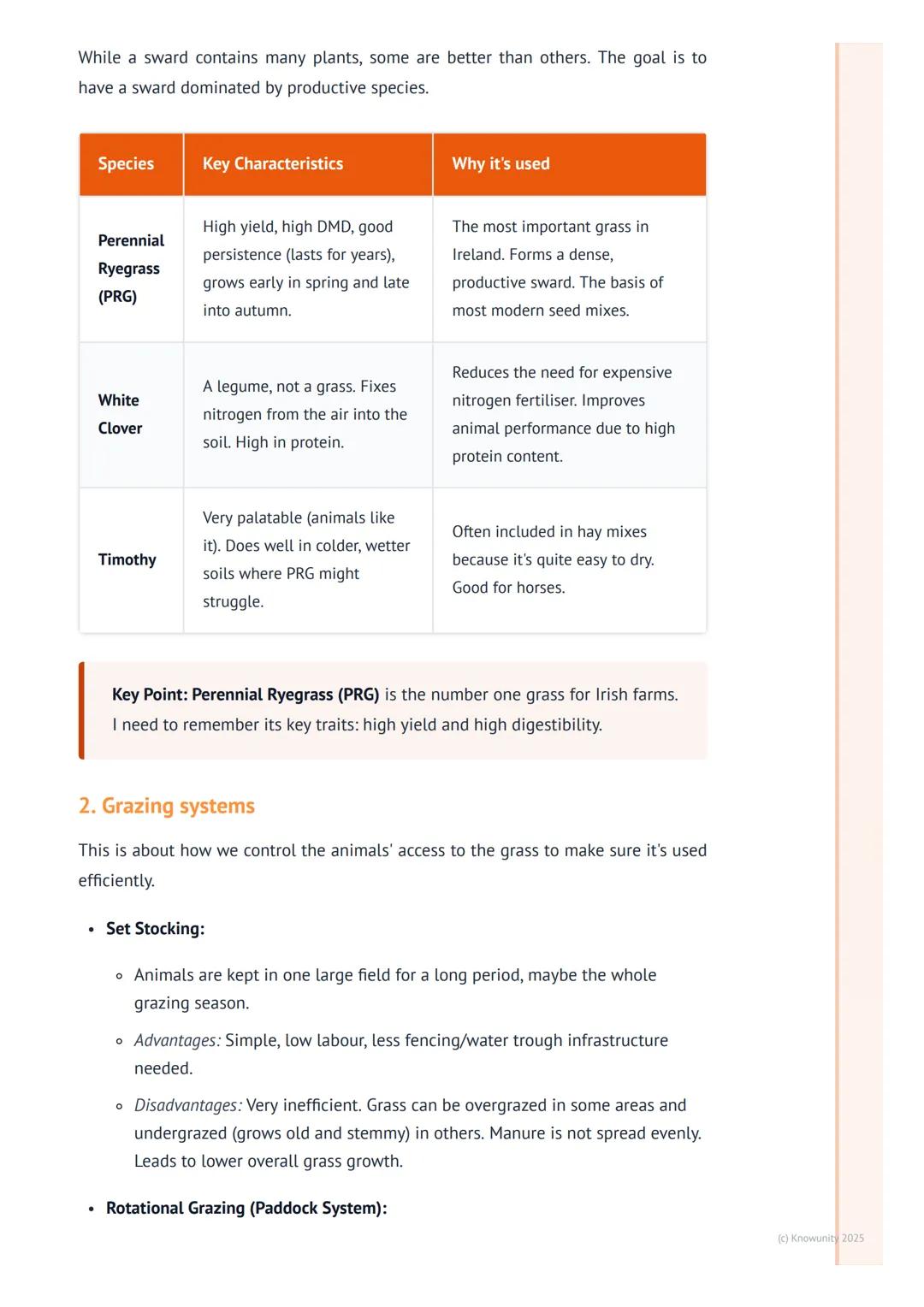
Essential Grassland Terms
Before diving into the technical stuff, you need to get your head around the key terms that farmers use every day. Don't worry - once you understand these, everything else clicks into place.
Dry Matter (DM) is probably the most important concept here. Fresh grass is roughly 80% water and 20% actual substance - that 20% is the dry matter. All feed measurements are based on DM because it's the bit that actually matters for nutrition.
Dry Matter Digestibility (DMD) tells you how much of that dry matter an animal can actually use. Young, leafy grass might have 80%+ DMD, whilst old, stemmy grass could drop to 60% or lower. Higher DMD means better animal performance - it's that straightforward.
Stocking rate measures how many animals you're keeping per hectare, using Livestock Units (LU) as the standard. One dairy cow equals roughly one LU, making comparisons between different farm types much easier.
Remember: Fresh, young grass = high DMD = happy, productive animals. Old, stemmy grass = low DMD = disappointing results.
3
of 6
Key Grass Species for Irish Farms
Not all grass is created equal - some species are absolute superstars whilst others are just taking up space. Perennial Ryegrass (PRG) is the undisputed champion of Irish grassland.
PRG delivers high yields, excellent digestibility, and keeps producing for years once established. It starts growing early in spring and keeps going late into autumn, which perfectly matches our grazing season. Most modern seed mixes are built around PRG for good reason.
White Clover isn't technically a grass, but it's a game-changer. As a legume, it pulls nitrogen from the air and fixes it in the soil, reducing your fertiliser bills. Plus, it's packed with protein, which boosts animal performance significantly.
Timothy is the reliable backup player - it thrives in wet, cold soils where PRG might struggle. It's particularly popular for hay production because it dries well and horses absolutely love it.
Pro Tip: A sward dominated by PRG and white clover is like having a Ferrari engine in your grassland - maximum performance with lower running costs.
4
of 6
Grazing Systems That Actually Work
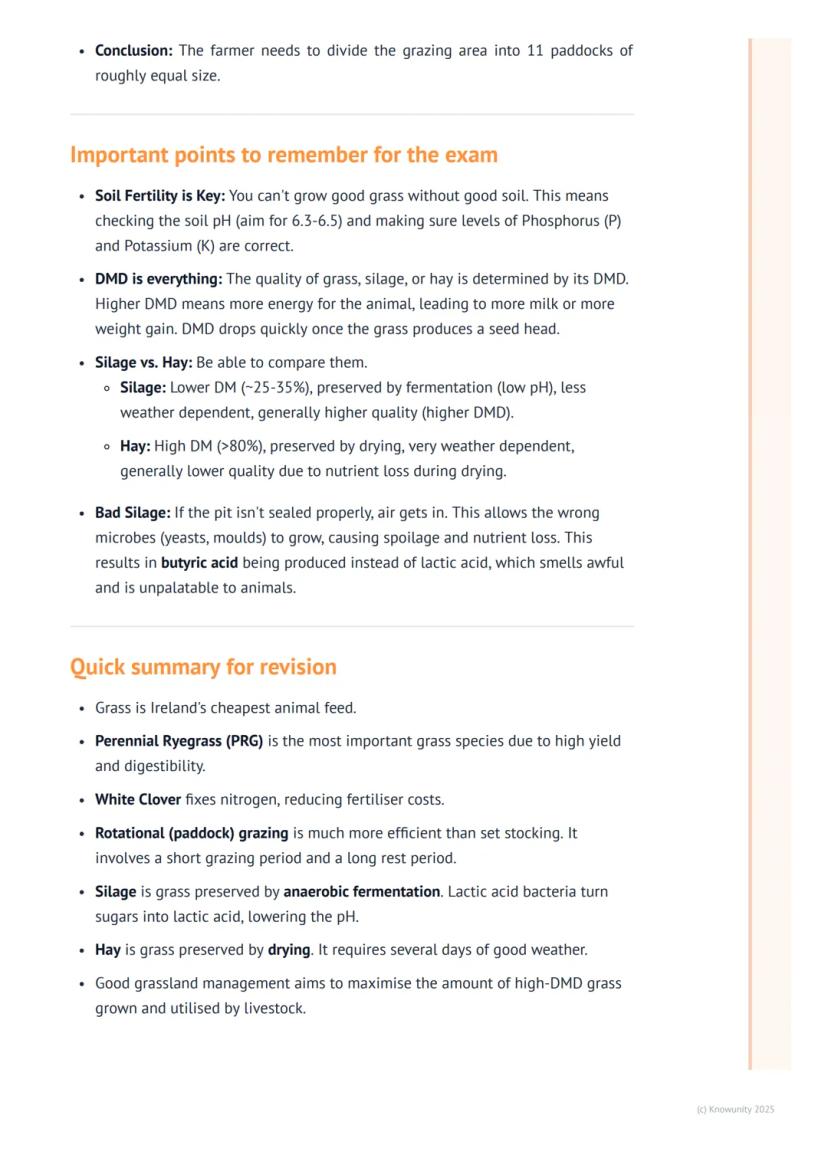
How you manage your animals' access to grass makes a massive difference to your results. Set stocking might seem simple (just leave the animals in one big field all season), but it's incredibly wasteful.
With set stocking, you get patchy grazing - some areas get hammered whilst others grow old and rank. The manure distribution is terrible, and overall grass production plummets. It's the lazy option that costs you money.
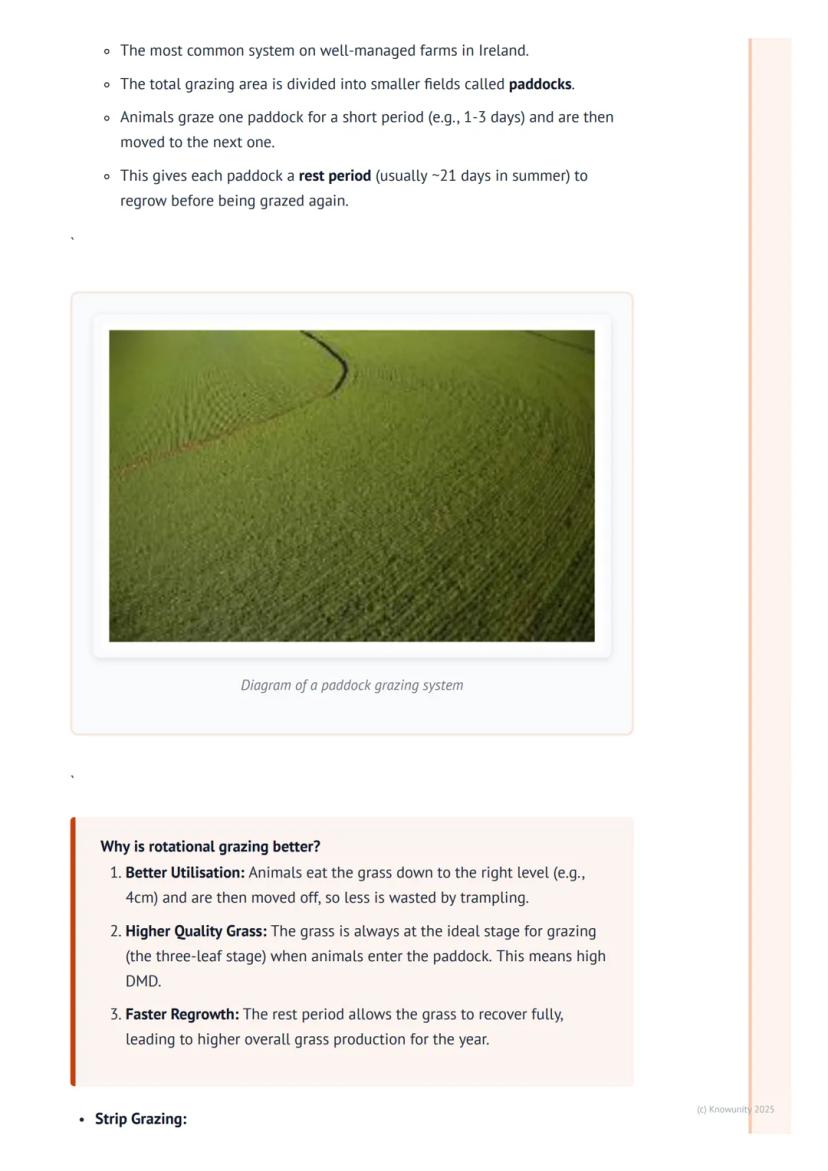
Rotational grazing (also called the paddock system) is where the magic happens. You divide your land into smaller paddocks and move animals every 1-3 days. Each paddock then gets about 21 days to recover and regrow.
This system delivers better grass utilisation (less waste), higher quality feed (animals always get fresh grass), and faster regrowth. The animals eat the grass down to about 4cm, then move on before they can damage it. It's more work initially, but the results speak for themselves.
Bottom Line: Rotational grazing isn't just better - it's dramatically better. Farmers who switch typically see 20-30% improvements in grass production.
5
of 6
Conserving Grass for Winter
Since grass barely grows in winter, you need to save your summer surplus. In Ireland, silage dominates because it doesn't depend on perfect weather like hay does.
Silage making is basically controlled fermentation - think of it as pickling grass. You cut the grass when DMD is high, let it wilt for 24-48 hours to concentrate the sugars, then pack it tightly to exclude air. Beneficial bacteria convert those sugars into lactic acid, dropping the pH to around 4.0 and preserving the grass.
The key is creating anaerobic conditions - no oxygen means no spoilage. Whether you're making pit silage or wrapped bales, air is the enemy. Get it wrong and you'll end up with smelly, rotten feed that animals won't touch.
Hay making is the traditional method - essentially drying grass to below 20% moisture. It requires several days of dry, sunny weather for tedding (turning the grass to dry evenly) and timing the harvest perfectly. When it works, hay stores brilliantly and animals love it.
Weather Reality Check: In Ireland's climate, silage is far more reliable than hay. You might wait weeks for proper hay weather, whilst silage just needs one decent day.
6
of 6
Putting It All Together
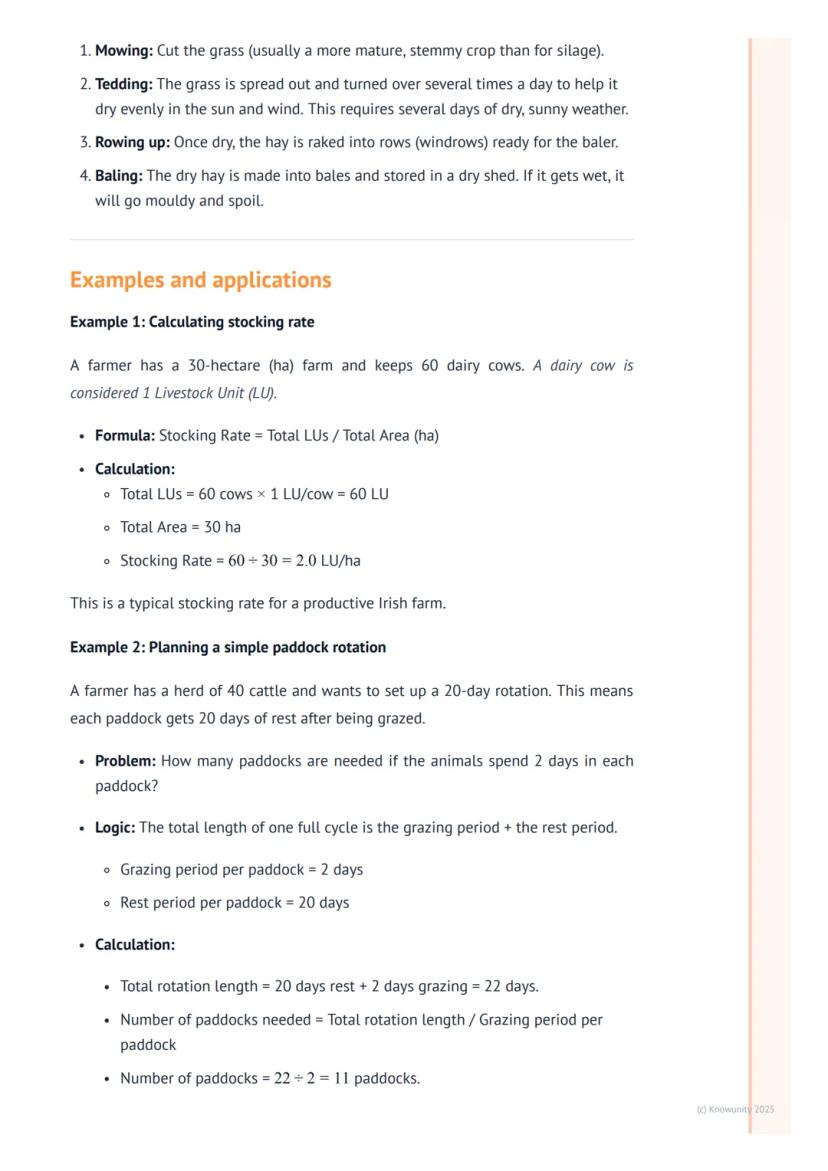
The numbers matter in grassland management. Stocking rate calculations are straightforward: divide your total Livestock Units by your land area in hectares. A typical productive Irish dairy farm runs at about 2.0 LU/ha.
For paddock rotations, work backwards from your target rest period. If you want 20 days rest and animals spend 2 days per paddock, you need 11 paddocks total .
Soil fertility underpins everything - you can't grow quality grass on poor soil. Aim for pH 6.3-6.5 and ensure adequate phosphorus and potassium levels. DMD is your quality benchmark - once grass starts producing seed heads, DMD crashes fast.
Remember the fundamental difference: silage is preserved by fermentation , whilst hay is preserved by drying (>80% DM, very weather dependent). Both have their place, but silage suits Irish conditions better.
Exam Success: Focus on why rotational grazing works, how silage fermentation preserves grass, and the key characteristics of Perennial Ryegrass. These concepts appear in virtually every grassland question.
Achamos que você nunca perguntaria...
O que é o assistente de IA da Knowunity?
Nosso companheiro de IA foi criado especificamente para atender às necessidades dos estudantes. Com base nos milhões de conteúdos que temos na plataforma, podemos oferecer respostas realmente relevantes e significativas. Mas não se trata apenas de respostas, o companheiro também está aqui para guiar você pelos desafios diários de aprendizado, com planos de estudo personalizados, quizzes ou conteúdos no chat e 100% de personalização com base nas suas habilidades e desenvolvimentos.
Onde posso baixar o app da Knowunity?
Pode descarregar a aplicação na Google Play Store e na Apple App Store.
Como posso receber meu pagamento? Quanto posso ganhar?
Sim, tem acesso gratuito ao conteúdo da aplicação e ao nosso companheiro de IA. Para desbloquear determinadas funcionalidades da aplicação, pode adquirir o Knowunity Pro.
Conteúdos mais populares
9 Irish
IrishIrish oral questions and answers
Questions and answers for the leaving cert oral
5th Year4264
 English
Key Quotes : Sive
Key Quotes and explanations: Sive
6th Year2842
IrishIrish oral questions
Outline of oral questions
5th Year2055
IrishIníon- le hÁine Durkin
Aine Durkin’s poem, Iníon: Themes & summary
5th Year850
IrishIrish poetry 2027
Iníon + Dínit an Bhróin
5th Year1133
IrishLC HL notes- Iníon (poem)
Includes poem in English and Irish, theme, key words & phrases
5th Year2284
EnglishCultural Context : Shawshank Redemption : Sive : Small Things Like These
Comparative Study : Cultural Context : Shawshank Redemption, Sive and Small Things Like These
6th Year1430
IrishMo Ghrá-sa (Idir Lúibíní)
Notes on mo ghrá-sa
5th Year380
IrishAn Gaeilge Aiste
Irish Language essay
6th Year1320
Não encontrou o que procurava? Explore outras matérias.
Avaliações dos nossos usuários. Eles gostaram de tudo — e você também vai gostar.
4.6/5App Store
4.7/5Google Play
O app é muito fácil de usar e bem projetado. Encontrei tudo o que estava procurando até agora e consegui aprender muito com as apresentações! Definitivamente vou usar o app para uma tarefa de classe! E, claro, também ajuda muito como inspiração.
Stefan Susuário de iOS
Este app é realmente ótimo. Tem muitos materiais de estudo e ajuda [...]. Minha matéria problemática é o francês, por exemplo, e o app tem tantas opções de ajuda. Graças a este app, eu melhorei meu francês. Eu recomendaria para qualquer pessoa.
Samantha Klichusuária de Android
Uau, estou realmente impressionado. Eu experimentei o app porque vi muitos anúncios e fiquei absolutamente maravilhado. Este app é A AJUDA que você quer para a escola e, acima de tudo, oferece muitas coisas, como treinos e resumos, que têm sido MUITO úteis para mim pessoalmente.
Annausuária de iOS
Agricultural Science5 visualizações·Atualizado Jun 12, 2026·6 páginasEffective Grassland Management Techniques
Grass is literally Ireland's green gold - our mild, wet climate makes us world-class at growing it, which is why our dairy and beef industries are so massive. Mastering grassland management is all about getting the most high-quality grass possible...
1
of 6
Cadastre-se para ver o conteúdo. É grátis!
- Acesso a todos os documentos
- Melhore suas notas
- Junte-se a milhões de estudantes
The Importance of Grassland in Ireland
Think about it - nearly every field you see driving through the countryside is growing grass, and there's a very good reason for that. Our weather might be rubbish for holidays, but it's absolutely perfect for grass production.
Grass is the cheapest feed you can give to cattle and sheep, which makes it the foundation of Irish agriculture. The whole game is about maximising both the quantity and quality of grass your land produces, then ensuring your animals actually eat as much of it as possible rather than trampling it into mud.
When farmers nail their grassland management, their animals perform better (more milk, better weight gain) and their profits shoot up. It's that simple - better grass equals better business.
Key Insight: Good grassland management isn't just about growing grass - it's about growing the right grass at the right time and making sure none of it goes to waste.
2
of 6Cadastre-se para ver o conteúdo. É grátis!
- Acesso a todos os documentos
- Melhore suas notas
- Junte-se a milhões de estudantes
Essential Grassland Terms
Before diving into the technical stuff, you need to get your head around the key terms that farmers use every day. Don't worry - once you understand these, everything else clicks into place.
Dry Matter (DM) is probably the most important concept here. Fresh grass is roughly 80% water and 20% actual substance - that 20% is the dry matter. All feed measurements are based on DM because it's the bit that actually matters for nutrition.
Dry Matter Digestibility (DMD) tells you how much of that dry matter an animal can actually use. Young, leafy grass might have 80%+ DMD, whilst old, stemmy grass could drop to 60% or lower. Higher DMD means better animal performance - it's that straightforward.
Stocking rate measures how many animals you're keeping per hectare, using Livestock Units (LU) as the standard. One dairy cow equals roughly one LU, making comparisons between different farm types much easier.
Remember: Fresh, young grass = high DMD = happy, productive animals. Old, stemmy grass = low DMD = disappointing results.
3
of 6Cadastre-se para ver o conteúdo. É grátis!
- Acesso a todos os documentos
- Melhore suas notas
- Junte-se a milhões de estudantes
Key Grass Species for Irish Farms
Not all grass is created equal - some species are absolute superstars whilst others are just taking up space. Perennial Ryegrass (PRG) is the undisputed champion of Irish grassland.
PRG delivers high yields, excellent digestibility, and keeps producing for years once established. It starts growing early in spring and keeps going late into autumn, which perfectly matches our grazing season. Most modern seed mixes are built around PRG for good reason.
White Clover isn't technically a grass, but it's a game-changer. As a legume, it pulls nitrogen from the air and fixes it in the soil, reducing your fertiliser bills. Plus, it's packed with protein, which boosts animal performance significantly.
Timothy is the reliable backup player - it thrives in wet, cold soils where PRG might struggle. It's particularly popular for hay production because it dries well and horses absolutely love it.
Pro Tip: A sward dominated by PRG and white clover is like having a Ferrari engine in your grassland - maximum performance with lower running costs.
4
of 6Cadastre-se para ver o conteúdo. É grátis!
- Acesso a todos os documentos
- Melhore suas notas
- Junte-se a milhões de estudantes
Grazing Systems That Actually Work
How you manage your animals' access to grass makes a massive difference to your results. Set stocking might seem simple (just leave the animals in one big field all season), but it's incredibly wasteful.
With set stocking, you get patchy grazing - some areas get hammered whilst others grow old and rank. The manure distribution is terrible, and overall grass production plummets. It's the lazy option that costs you money.
Rotational grazing (also called the paddock system) is where the magic happens. You divide your land into smaller paddocks and move animals every 1-3 days. Each paddock then gets about 21 days to recover and regrow.
This system delivers better grass utilisation (less waste), higher quality feed (animals always get fresh grass), and faster regrowth. The animals eat the grass down to about 4cm, then move on before they can damage it. It's more work initially, but the results speak for themselves.
Bottom Line: Rotational grazing isn't just better - it's dramatically better. Farmers who switch typically see 20-30% improvements in grass production.
5
of 6Cadastre-se para ver o conteúdo. É grátis!
- Acesso a todos os documentos
- Melhore suas notas
- Junte-se a milhões de estudantes
Conserving Grass for Winter
Since grass barely grows in winter, you need to save your summer surplus. In Ireland, silage dominates because it doesn't depend on perfect weather like hay does.
Silage making is basically controlled fermentation - think of it as pickling grass. You cut the grass when DMD is high, let it wilt for 24-48 hours to concentrate the sugars, then pack it tightly to exclude air. Beneficial bacteria convert those sugars into lactic acid, dropping the pH to around 4.0 and preserving the grass.
The key is creating anaerobic conditions - no oxygen means no spoilage. Whether you're making pit silage or wrapped bales, air is the enemy. Get it wrong and you'll end up with smelly, rotten feed that animals won't touch.
Hay making is the traditional method - essentially drying grass to below 20% moisture. It requires several days of dry, sunny weather for tedding (turning the grass to dry evenly) and timing the harvest perfectly. When it works, hay stores brilliantly and animals love it.
Weather Reality Check: In Ireland's climate, silage is far more reliable than hay. You might wait weeks for proper hay weather, whilst silage just needs one decent day.
6
of 6Cadastre-se para ver o conteúdo. É grátis!
- Acesso a todos os documentos
- Melhore suas notas
- Junte-se a milhões de estudantes
Putting It All Together
The numbers matter in grassland management. Stocking rate calculations are straightforward: divide your total Livestock Units by your land area in hectares. A typical productive Irish dairy farm runs at about 2.0 LU/ha.
For paddock rotations, work backwards from your target rest period. If you want 20 days rest and animals spend 2 days per paddock, you need 11 paddocks total .
Soil fertility underpins everything - you can't grow quality grass on poor soil. Aim for pH 6.3-6.5 and ensure adequate phosphorus and potassium levels. DMD is your quality benchmark - once grass starts producing seed heads, DMD crashes fast.
Remember the fundamental difference: silage is preserved by fermentation , whilst hay is preserved by drying (>80% DM, very weather dependent). Both have their place, but silage suits Irish conditions better.
Exam Success: Focus on why rotational grazing works, how silage fermentation preserves grass, and the key characteristics of Perennial Ryegrass. These concepts appear in virtually every grassland question.
Achamos que você nunca perguntaria...
O que é o assistente de IA da Knowunity?
Nosso companheiro de IA foi criado especificamente para atender às necessidades dos estudantes. Com base nos milhões de conteúdos que temos na plataforma, podemos oferecer respostas realmente relevantes e significativas. Mas não se trata apenas de respostas, o companheiro também está aqui para guiar você pelos desafios diários de aprendizado, com planos de estudo personalizados, quizzes ou conteúdos no chat e 100% de personalização com base nas suas habilidades e desenvolvimentos.
Onde posso baixar o app da Knowunity?
Pode descarregar a aplicação na Google Play Store e na Apple App Store.
Como posso receber meu pagamento? Quanto posso ganhar?
Sim, tem acesso gratuito ao conteúdo da aplicação e ao nosso companheiro de IA. Para desbloquear determinadas funcionalidades da aplicação, pode adquirir o Knowunity Pro.
Conteúdos mais populares
9IrishIrish oral questions and answers
Questions and answers for the leaving cert oral
5th Year4264
EnglishKey Quotes : Sive
Key Quotes and explanations: Sive
6th Year2842
IrishIrish oral questions
Outline of oral questions
5th Year2055
IrishIníon- le hÁine Durkin
Aine Durkin’s poem, Iníon: Themes & summary
5th Year850
IrishIrish poetry 2027
Iníon + Dínit an Bhróin
5th Year1133
IrishLC HL notes- Iníon (poem)
Includes poem in English and Irish, theme, key words & phrases
5th Year2284
EnglishCultural Context : Shawshank Redemption : Sive : Small Things Like These
Comparative Study : Cultural Context : Shawshank Redemption, Sive and Small Things Like These
6th Year1430
IrishMo Ghrá-sa (Idir Lúibíní)
Notes on mo ghrá-sa
5th Year380
IrishAn Gaeilge Aiste
Irish Language essay
6th Year1320
Não encontrou o que procurava? Explore outras matérias.
Avaliações dos nossos usuários. Eles gostaram de tudo — e você também vai gostar.
4.6/5App Store
4.7/5Google Play
O app é muito fácil de usar e bem projetado. Encontrei tudo o que estava procurando até agora e consegui aprender muito com as apresentações! Definitivamente vou usar o app para uma tarefa de classe! E, claro, também ajuda muito como inspiração.
Stefan Susuário de iOS
Este app é realmente ótimo. Tem muitos materiais de estudo e ajuda [...]. Minha matéria problemática é o francês, por exemplo, e o app tem tantas opções de ajuda. Graças a este app, eu melhorei meu francês. Eu recomendaria para qualquer pessoa.
Samantha Klichusuária de Android
Uau, estou realmente impressionado. Eu experimentei o app porque vi muitos anúncios e fiquei absolutamente maravilhado. Este app é A AJUDA que você quer para a escola e, acima de tudo, oferece muitas coisas, como treinos e resumos, que têm sido MUITO úteis para mim pessoalmente.
Annausuária de iOS